Regional Report South_Dakota Hail Report

The Vivian Stone: How South Dakota's Record Hailstone Revealed a Hidden Supercell Corridor

On July 23, 2010, a hailstone the size of a volleyball crashed through a roof in Vivian, South Dakota, establishing a US record that still stands — and exposing a terrain-driven hail factory most Americans have never heard of.

The Vivian Stone: How South Dakota's Record Hailstone Revealed a Hidden Supercell Corridor
Hail Protector Editorial / GeminiRegional Report

8

inches

Vivian stone diameter

1.94

lbs

Record hailstone weight

~7-9

days/year

Large hail frequency

~350

miles

Hail corridor length

The Black Hills Convergence Zone

Drive east from Rapid City on Interstate 90 during late afternoon in June, and you'll often see the same atmospheric script playing out. Towering cumulus clouds bubble up along the Black Hills ridgeline. By early evening, one or two cells explode into supercells, their anvil tops spreading eastward like white sails. These storms track along a corridor roughly following the Missouri River valley, hitting communities like Philip, Presho, and Chamberlain with alarming frequency.

The mechanism is purely topographic. The Black Hills rise abruptly from the surrounding plains, creating a 4,000-foot obstacle that disrupts westerly flow. When southerly winds bring Gulf moisture into South Dakota during summer, this air mass gets forced upward along the eastern slopes. The lifting triggers convective initiation right along the terrain boundary. Meanwhile, dry air from Wyoming and Montana often overruns the moist layer at mid-levels, creating the kind of capped environment that produces explosive storms once the cap breaks.

National Severe Storms Laboratory research has documented how terrain-initiated supercells often produce larger hail than their plains counterparts. The orographic lift provides an initial boost to updraft development, allowing storms to achieve rotation earlier in their lifecycle. These storms also tend to move more slowly initially, remaining anchored near the terrain boundary while they intensify. Slower storm motion means hailstones spend more time in the growth zone.

The corridor extends approximately 350 miles from Rapid City to Sioux Falls, but the most intense hail activity concentrates in the western half — from the Black Hills to Pierre. This stretch sees large hail (one inch diameter or greater) on approximately 7-9 days per year during May through August. For context, that's comparable to hail frequency in the Texas Panhandle, but with far less public awareness because South Dakota's population density is a fraction of Texas.

Vehicle damage tells the real story. South Dakota has approximately 885,000 residents spread across roughly 77,000 square miles. The state's sparse population means hail events often strike areas with more cattle than people. But when storms do hit populated areas, the per-capita damage can be staggering. A single supercell in June 2015 caused an estimated $100 million in damage across Rapid City and surrounding communities, with thousands of vehicles totaled. Insurance adjusters from across the region descended on the city for weeks, processing claims in parking lots turned into open-air body shops.

The invisibility of South Dakota's hail problem in national media creates a strange disconnect. Residents along the Black Hills corridor know to park in garages during severe weather watches. They know June means hail season. They've learned to read the sky — watching for that distinctive cauliflower texture on developing cells to the west. But outside the state, even weather enthusiasts often don't realize South Dakota holds the US hail record or that its terrain creates one of the continent's most reliable supercell environments.
Major South Dakota Hail Events

  1. 2003

    Aurora/Brule Counties

    Baseball-sized hail penetrated metal grain storage structures

  2. 2008

    Meade County Strike

    Softball-sized stones destroyed vehicle windshields across region

  3. July 23, 2010

    Vivian Record Stone

    8-inch hailstone crashed through roof, establishing US record still standing today

  4. June 2015

    Rapid City Damage

    Single supercell caused $100M in losses, thousands of vehicles totaled

  5. 2019

    Sioux Falls Swath

    Over 50,000 vehicles damaged in one evening, months-long repair backlog

Beyond Vivian

The 2010 record stone wasn't an anomaly. It was the extreme end of a distribution that produces violent hail across South Dakota every summer. In 2003, a supercell dropped baseball-sized hail across Aurora and Brule counties, punching holes through metal grain bins. In 2008, softball-sized stones shattered windshields across Meade County. In 2019, a hail swath near Sioux Falls damaged an estimated 50,000 vehicles in a single evening, creating a backlog at body shops that lasted months.

The Vivian stone itself nearly didn't make it into the record books. The homeowner, Lee Scott, initially stored it in his freezer without understanding its significance. A neighbor who worked in emergency management recognized the stone's size and contacted the National Weather Service. Meteorologists arrived the next day with calipers and scales, documenting measurements that would establish the new record. The stone had already melted slightly, meaning its original dimensions were likely even larger.

Scientists later analyzed the Vivian stone's internal structure using CT scanning technology. The concentric layers revealed the stone's journey through the storm — each layer representing a cycle through the updraft into the growth zone, then a partial descent before being lofted again. The largest stones require this repeated cycling, which only happens in supercells with exceptional organization and longevity.

South Dakota's hail season peaks in June, when the jet stream typically positions itself across the northern Plains, providing strong wind shear, while surface temperatures climb high enough to generate instability. This combination — strong shear and moderate instability — favors supercells over disorganized multicell clusters. July remains active, though the jet stream often retreats northward into Canada, reducing shear. By August, the pattern typically shifts, with high pressure dominating and convection becoming more scattered.

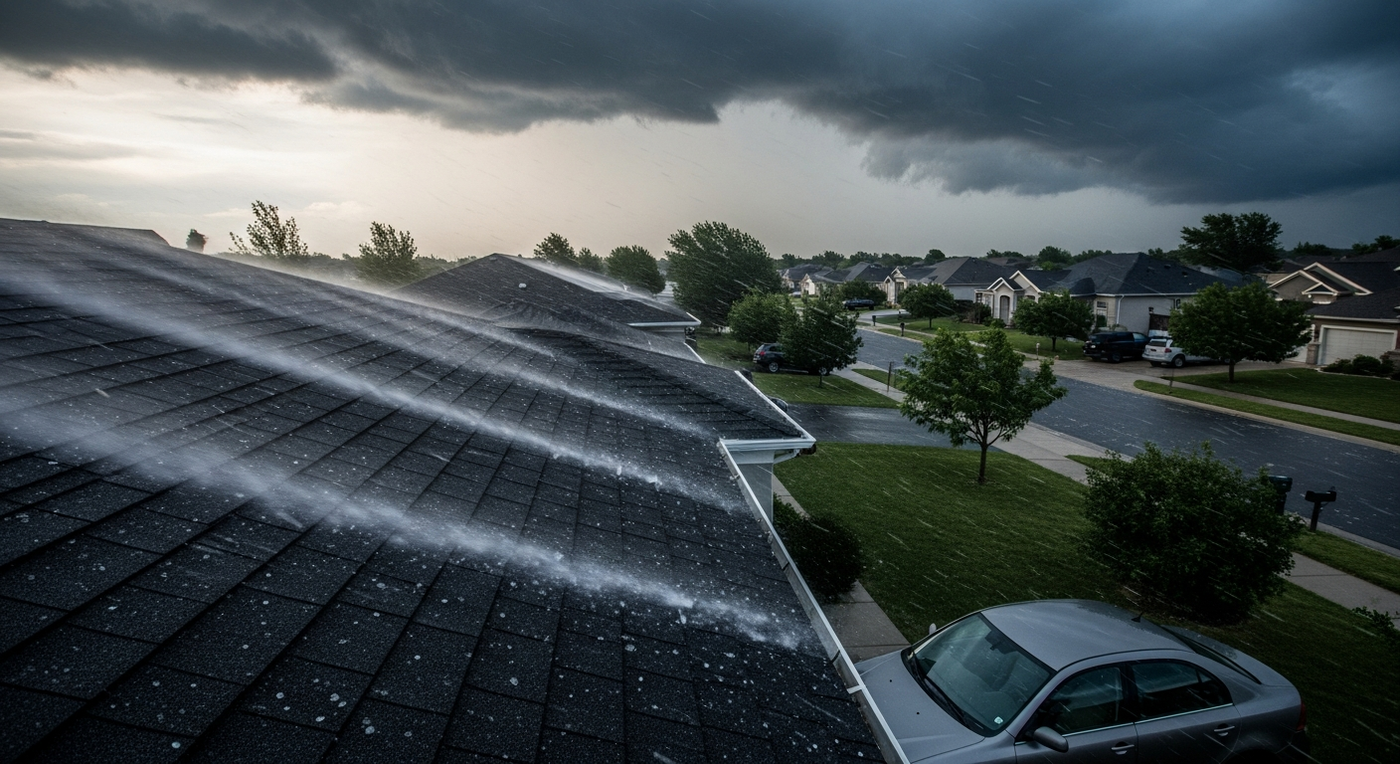
The predictability of the Black Hills corridor creates both opportunities and challenges for forecasters. On one hand, knowing where storms will likely initiate helps with watch and warning lead times. On the other hand, the sheer frequency of supercell development can create warning fatigue. When severe thunderstorm warnings become routine, residents may become desensitized to the threat. This is particularly problematic with hail, since damage occurs so rapidly — by the time you hear the stones hitting your roof, it's too late to move your vehicle.

Insurance rates in the Black Hills corridor reflect the hail reality. Comprehensive coverage premiums in Rapid City and Pierre typically run higher than in Sioux Falls, despite the eastern city being larger. Insurers have long memories for hail events, and the western corridor's frequency shows up clearly in actuarial tables. Some insurers now require higher deductibles for comprehensive coverage in certain ZIP codes, essentially pricing in the expectation of hail damage.

The question isn't whether South Dakota will produce another record hailstone. The atmospheric ingredients remain the same — the Black Hills aren't going anywhere, and the jet stream will continue bringing supercell environments to the northern Plains each summer. The question is whether anyone will be positioned to recover and document the next record when it falls. Given South Dakota's sparse population, the odds favor the next record stone landing in an empty pasture, melting into the grass before anyone knows it existed.

That's the paradox of South Dakota hail: it's simultaneously one of the most intense hail climates in North America and one of the least observed. The Vivian stone became a record because someone happened to be home, happened to preserve it, and happened to know who to call. How many larger stones have fallen in empty rangeland, leaving nothing but pockmarks in the soil? The record we have may say less about South Dakota's maximum hail potential than about the accidents of documentation.

Verified Sources

  1. Storm Prediction Center

    Storm Prediction Center

    Hail climatology data for South Dakota and northern Plains region

Back to Hail Science