Regional Report Nebraska Hail Report

Omaha Hail Damage Repair: What You'll Actually Pay and How Long You'll Wait

Omaha's combination of persistent hail activity and a mature PDR market means higher costs but more skilled technicians — if you can separate the established shops from the storm chasers.

Omaha Hail Damage Repair: What You'll Actually Pay and How Long You'll Wait
Hail Protector Editorial / GeminiRegional Report

Why Omaha Repair Costs Run Higher Than National Averages

A full-vehicle paintless dent repair in Omaha typically runs between $1,500 and $3,500, roughly 15-20% above what you'd pay in markets with less frequent hail activity according to local shop estimates. The premium isn't arbitrary. Omaha sits in a hail corridor where severe storms recur annually, creating consistent demand that supports a year-round PDR infrastructure. Shops maintain specialized equipment, retain experienced technicians, and command pricing that reflects genuine expertise rather than emergency rates.

For light hail damage affecting a single panel, expect to pay approximately $100-150 per panel. A hood typically costs around $200-400 to repair, while a roof — the most labor-intensive surface — can run roughly $500-800. These figures assume paintless dent removal is viable. Once hail breaks paint or creates dents too deep for PDR (typically anything exceeding a half-dollar in diameter), you're looking at conventional body work that can easily double or triple those estimates.

The cost structure reflects Omaha's peculiar position: enough hail to justify permanent infrastructure, but not so much that the market becomes saturated and drives prices down through competition.

The Storm Chaser Problem and How to Avoid It

Within 24 hours of a significant hail event, you'll see them: trucks with out-of-state plates, hastily printed business cards, and technicians offering to start work immediately. Storm chasers follow severe weather across the Great Plains, and Omaha's consistent hail activity makes it a regular stop on the circuit.

Some are legitimate contractors expanding their service area.

The established PDR shops in Omaha — businesses that operate year-round with physical locations — report the same pattern after major storms: a flood of poorly executed repairs they're asked to fix months later, after the storm chaser has moved to the next hail event. The telltale signs include incomplete removal (dents pushed flat but still visible in certain light), paint damage from aggressive technique, and stretched metal that can't be properly corrected without conventional body work.

Here's what most people get wrong: they assume the technician willing to start immediately is doing them a favor. In reality, reputable shops book out precisely because they're reputable. A two-week wait isn't a red flag — it's often a green one.

Timeline Reality: When Your Car Actually Gets Fixed

After a widespread hail event in the Omaha metro, wait times at established shops stretch to four to eight weeks. This isn't inefficiency; it's mathematics. A thorough PDR job on a vehicle with moderate hail damage typically requires 12-20 hours of technician time. Shops can't simply double their workforce for a six-week surge, then lay everyone off.

Getting on a waiting list within 48 hours of a storm is critical. According to Insurance Information Institute data, hail claims spike immediately after events, and shops fill their schedules on a first-come basis. Call before you file your insurance claim. Call before you get an estimate.

The repair itself, once your vehicle enters the shop, typically takes three to five days for moderate damage. Severe hail affecting the entire vehicle can require up to two weeks. These timelines assume PDR only; add conventional body work and you're looking at three to four weeks in the shop.

One counterintuitive detail: smaller shops sometimes finish faster. A two-technician operation working exclusively on your vehicle can outpace a larger facility juggling fifteen cars simultaneously.

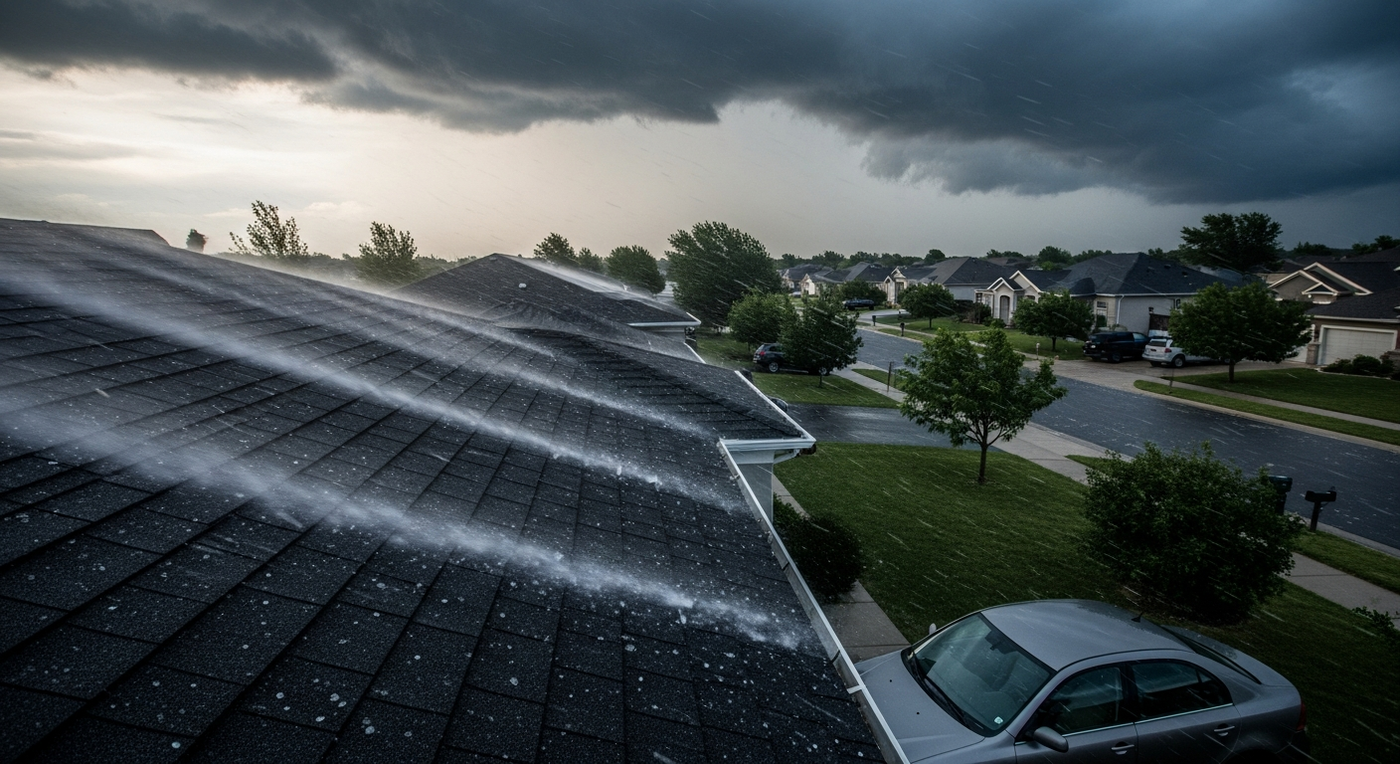
Omaha hail damage before escalation
Omaha hail damage during impact

What Insurance Actually Covers (and What It Doesn't)

Comprehensive coverage handles hail damage, minus your deductible. That's the simple part. The complexity emerges in how insurance companies and repair shops negotiate pricing.

Most insurers work from standardized databases that estimate repair costs based on regional averages. In Omaha, these estimates typically align reasonably well with actual shop charges because the market is mature and data-rich. But "reasonably well" isn't "exactly." Expect some back-and-forth between your chosen shop and the insurance adjuster, particularly if the initial estimate misses hidden damage that becomes apparent once repair begins.

Some shops offer to "eat" your deductible — covering it themselves to secure your business. This practice sits in a legal gray area and often means the shop inflates the claim elsewhere to recover the cost.

Rental car coverage varies dramatically by policy. A typical hail repair timeline of four to six weeks can generate rental costs of approximately $40-60 per day, or around $1,200-2,500 total. If your policy caps rental reimbursement at $30/day for 30 days, you're covering the gap out of pocket.

$1,500-$3,500

Full-vehicle PDR cost range

15-20%

%

Omaha premium vs national

4-8

weeks

Post-storm shop wait times

5-10%

%

Resale value reduction

Vetting a Technician: The Questions That Actually Matter

Certifications sound impressive but tell you less than you'd think. The industry has multiple certification bodies — I-CAR, ASE, various PDR-specific programs — and while they indicate baseline competence, they don't distinguish between adequate and excellent work.

Ask instead: How long has this specific technician been doing PDR? Not the shop, the individual who will touch your car. PDR is a craft skill that improves dramatically with experience. A technician with ten years in the Omaha market has repaired thousands of hail-damaged vehicles and developed the judgment to know when PDR will work and when it won't.

Request photos of previous work, specifically vehicles with similar damage patterns to yours. Any established shop will have dozens of before-and-after sets on their phone.

Check whether the shop is I-CAR Gold Class certified — this indicates the business invests in ongoing training across multiple repair disciplines. While it doesn't guarantee excellence, it suggests a commitment to professional standards beyond the minimum.

Ask about warranty. Reputable PDR work should carry a lifetime warranty against the specific dents repaired. If a shop hedges on this, walk away.

The Diminishing Value Problem Nobody Mentions

Here's the thing about hail damage that insurance adjusters won't emphasize: even perfect repairs diminish resale value. A vehicle with a hail claim on its history typically sells for an estimated 5-10% less than an identical vehicle without that history, regardless of repair quality.

Carfax and AutoCheck reports flag insurance claims. Buyers see "hail damage" and assume the worst, even when PDR has restored the vehicle to pre-loss condition. This matters if you plan to sell within three to five years.

For severe hail damage where the repair cost approaches 60-70% of the vehicle's value, some owners opt to accept a total loss settlement rather than repair. The math depends on your specific situation, but it's worth calculating before you commit to a major repair on a vehicle with diminished value. The math depends on your specific situation, but it's worth calculating before you commit to a $4,000 repair on a vehicle worth $7,000.

Seasonal Timing and Strategic Waiting

Omaha's hail season peaks in May and June, with activity extending through July. By August, the immediate post-storm rush has worked through the system, but shops remain busy with the backlog.

If your damage is cosmetic only — dents without paint damage, no functional impairment — waiting until September or October can reduce your timeline significantly. Demand drops as hail season ends, and shops that were booking eight weeks out in June may have availability within days by fall.

This strategy only works if you can tolerate driving a dented vehicle and if the damage won't worsen. Hail dents don't spread, but any paint damage will rust, particularly through Nebraska winters. Don't wait on compromised paint.

What Happens When PDR Isn't Possible

An estimated 20-30% of hail damage is too severe for paintless repair. Deep dents, broken paint, damage to panel edges or body lines — these require conventional body work.

Conventional repair means sanding, filling, repainting, and blending. Costs typically jump to $2,500-6,000 for moderate damage, and timelines extend to three to four weeks. The work is fundamentally different: you're not restoring the original panel, you're reconstructing its appearance.

Panel replacement becomes necessary when metal is stretched beyond repair or when repair costs exceed replacement costs. Hoods and trunk lids are commonly replaced; roofs almost never are because replacement requires cutting the vehicle's structure.

For severe hail that requires extensive conventional work, get multiple estimates. Quality variation in body work exceeds variation in PDR, and you're making a decision that permanently affects your vehicle's appearance and value.

The Mobile PDR Option

Mobile technicians who come to your location charge roughly the same rates as shop-based work, sometimes an estimated 10-15% more for the convenience. For minor damage — a few dents on accessible panels — mobile PDR makes sense.

For moderate to severe hail affecting multiple panels, shop-based repair is superior. Shops have specialized lighting that reveals subtle imperfections, tools that can't be transported easily, and the controlled environment necessary for quality work. Mobile technicians working in your driveway are fighting sun glare, wind, and equipment limitations.

The mobile option works best for follow-up repairs: a few dents the shop missed, or new damage that occurs after your main repair is complete.

Verified Sources

  1. NOAA Storm Prediction Center

    NOAA Storm Prediction Center

    Official convective outlook archive and risk categories.

  2. NOAA Storm Prediction Center

    NOAA Storm Prediction Center

    Storm report archive with severe hail event records.

  3. Insurance Information Institute

    Insurance Information Institute

    Hail claim patterns and comprehensive coverage details

  4. National Weather Service

    National Weather Service

    Public guidance on severe thunderstorm and hail safety.

  5. Insurance Information Institute

    Insurance Information Institute

    Insurance context for auto losses and claims impact.

  6. U.S. Census Bureau

    U.S. Census Bureau

    Housing growth and suburban expansion context.

Back to Hail Science