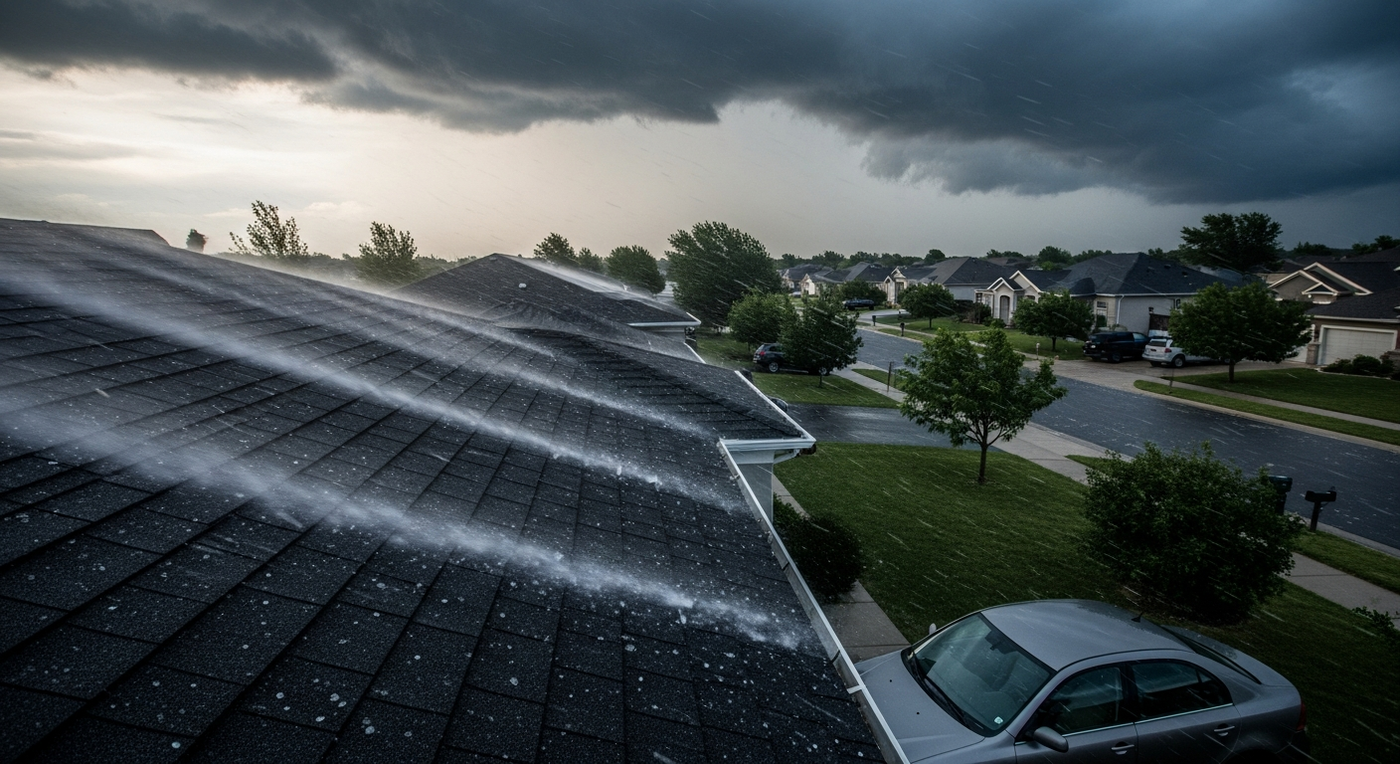
The Millisecond Timeline
The physics of the collision unfolds in distinct phases, though they blur together at timescales measured in fractions of a millisecond. In the first 0.1 to 0.3 milliseconds, the hailstone makes contact and begins compressing. Ice, despite its hardness, is brittle—it has high compressive strength but shatters under sudden stress. The stone's outer surface fractures into a web of cracks, and energy dissipates as heat and sound (the sharp *crack* of hail on metal). This is the only phase where the ice itself absorbs meaningful energy; once it's shattered, the remaining momentum transfers almost entirely to the metal.
Between 0.3 and 1.0 milliseconds, the metal panel reaches peak deflection. The steel or aluminum stretches, and stress concentrates at the impact point. If the panel is thin—modern hoods are typically 0.7 to 0.9 millimeters thick, roughly the thickness of three credit cards—the material has less mass to resist deformation. Thicker panels, like those on older vehicles or commercial trucks, distribute stress better and resist denting. The panel's curvature also plays a role: a gently curved surface deflects impacts more effectively than a flat one, which is why the center of a hood dents more easily than the sloped areas near the windshield.
By 1.5 to 2.0 milliseconds, the event is over. The hailstone, now a spray of ice fragments, bounces away or disintegrates. The metal panel either returns to its original shape—no dent—or settles into a permanent depression. The depth of that depression depends on how far past the yield point the metal was pushed. A shallow dent might be roughly 2-3 millimeters deep; severe hail damage can create craters approximately 10 millimeters or more, with the metal stretched so thin it's visibly lighter in color where the paint cracked.