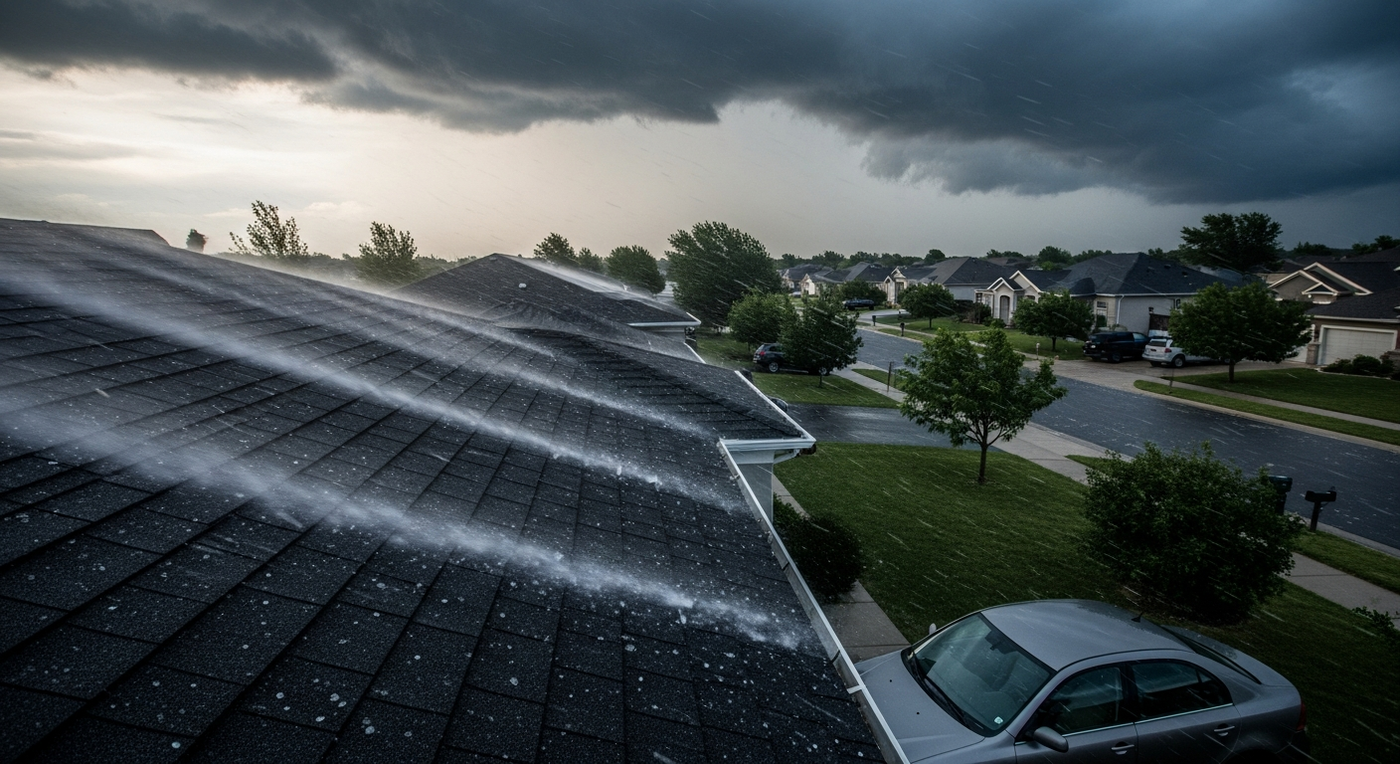
The Heat Island Meets Tropical Moisture
The Phoenix metro's unique vulnerability to monsoon hail stems from a collision between geography and thermodynamics that creates some of the most explosive thunderstorm development in North America.
By mid-June, the desert floor has been baking under triple-digit temperatures for weeks. Asphalt, concrete, and tile roofs turn the Valley into a massive heat reservoir—the urban heat island effect can push temperatures in central Phoenix roughly 5-10 degrees higher than surrounding desert. When monsoon moisture arrives from the Gulf of California or the Gulf of Mexico, typically in early July, this superheated air becomes fuel for vertical storm development.
The process unfolds with startling speed. Morning skies appear crystalline and empty. By noon, temperatures reach 108, 110, 112 degrees. The desert floor radiates heat upward in shimmering waves. Then, around 2 or 3 PM, moisture-laden air begins flowing into the Valley. The contrast between the scorching surface and cooler air aloft creates instability—atmospheric conditions where air parcels, once lifted, continue rising violently rather than settling back down.
What happens next can transform a clear afternoon into a hail-producing supercell in under an hour. The superheated air rises so rapidly that it punches through the equilibrium level where updrafts normally stop, creating towering cumulonimbus clouds that can reach approximately 40,000 to 50,000 feet. Inside these columns, water droplets get caught in powerful updrafts, cycling up and down through freezing layers, accumulating ice with each pass. When the stones finally grow too heavy for the updraft to support, they fall—often while the sun still shines on neighborhoods just a few miles away.
This speed is what catches Phoenix drivers off guard. In the Great Plains, residents can watch storm systems approach for hours, tracking them on radar and moving vehicles under cover. Phoenix monsoon cells develop locally and explosively. A driver leaving work at 4 PM might step into blinding sunshine, drive five miles, and suddenly find themselves in a deluge dropping quarter-sized hail. There's no warning system that feels relevant when the sky overhead looks benign.
The Valley's topography amplifies the chaos. Mountains surrounding the basin—the McDowell Range to the northeast, South Mountain to the south, the White Tank Mountains to the west—force rising air even higher and can steer storms in unpredictable directions. A cell that appears to be tracking north toward Anthem can suddenly veer east and pummel Fountain Hills. Meteorologists can identify favorable conditions and issue monsoon outlooks, but pinpointing exactly which neighborhood will get hammered remains difficult until the storm is already forming overhead.
Here's what most people get wrong about monsoon hail: they assume it's an evening phenomenon, part of those dramatic sunset storms that light up the sky with lightning and dust walls. But National Weather Service data for Phoenix shows hail events cluster between 2 PM and 6 PM—the hottest part of the day, when thermal instability peaks. The iconic haboobs and lightning shows that arrive at dusk are often the remnants of storms that already produced their hail earlier in the afternoon, miles upwind.