The June Window
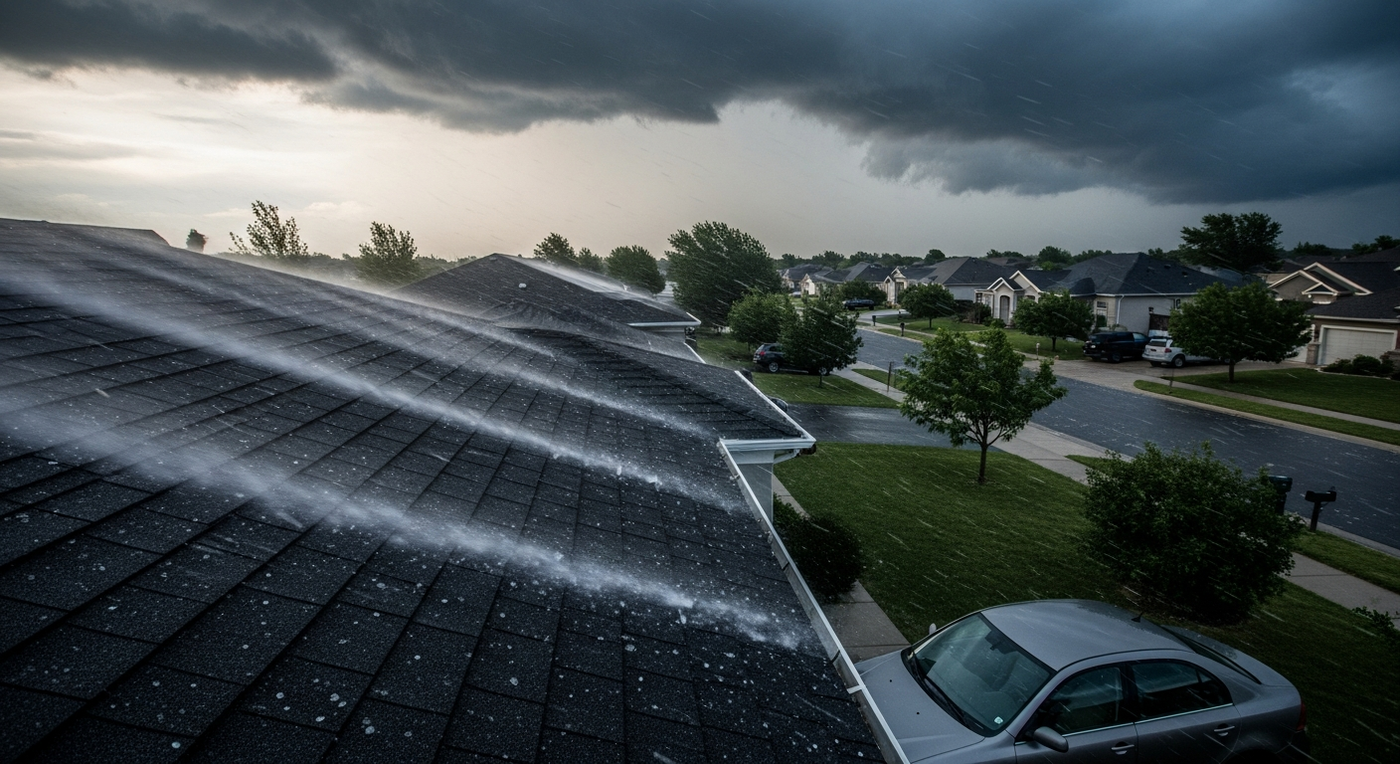
June represents peak exposure for Iowa's hail risk, when surface temperatures climb into the 80s and 90s while upper-level winds remain strong enough to organize severe storms. The combination creates what meteorologists call a "loaded gun" environment—abundant energy waiting for a trigger. That trigger often arrives in the form of a shortwave trough, a dip in the jet stream that provides the lift needed to break the cap, that layer of warm air aloft that acts like a lid on a pressure cooker. Once the cap breaks, usually in mid to late afternoon, storms can explode vertically in minutes.
Des Moines' position at roughly 41.6°N latitude places it in a transition zone where continental and maritime air masses compete for dominance throughout late spring and early summer. When Gulf moisture surges northward along the I-35 corridor—a common pattern ahead of approaching low-pressure systems—it often stalls out over central Iowa as it encounters cooler, drier air retreating from the north. That boundary becomes a focal point for storm initiation, and the storms that form along it have access to extreme instability. Hailstones larger than golf balls require updrafts exceeding approximately 100 mph, and Iowa's June environments increasingly support those velocities.
The agricultural economy adds a layer of complexity to Iowa's hail awareness gap. Crop insurance has long covered hail damage to corn and soybeans, creating a robust infrastructure for assessing and compensating agricultural losses. But that system doesn't extend to the parking lots of Des Moines or the driveways of suburban Cedar Rapids, where residents often learn about their exposure only after a storm has already shattered windshields and dimpled sheet metal. The typical cost of hail damage to a vehicle can run into the thousands of dollars, and comprehensive insurance coverage—the type that covers hail—typically carries deductibles ranging from several hundred to around a thousand dollars. For households without that coverage, a single severe hail event can represent a significant financial shock.
Vehicle vulnerability in Iowa also reflects the state's car-dependent geography. Unlike denser urban areas where structured parking is common, Iowa's cities sprawl horizontally, with vast surface parking lots serving shopping centers, office parks, and apartment complexes. During a severe hail warning, there's often nowhere to move a vehicle on short notice. The storms themselves can develop with remarkable speed—a towering cumulus cloud can evolve into a hail-producing supercell in roughly 20 to 30 minutes, leaving little time for protective action even when warnings are issued promptly.