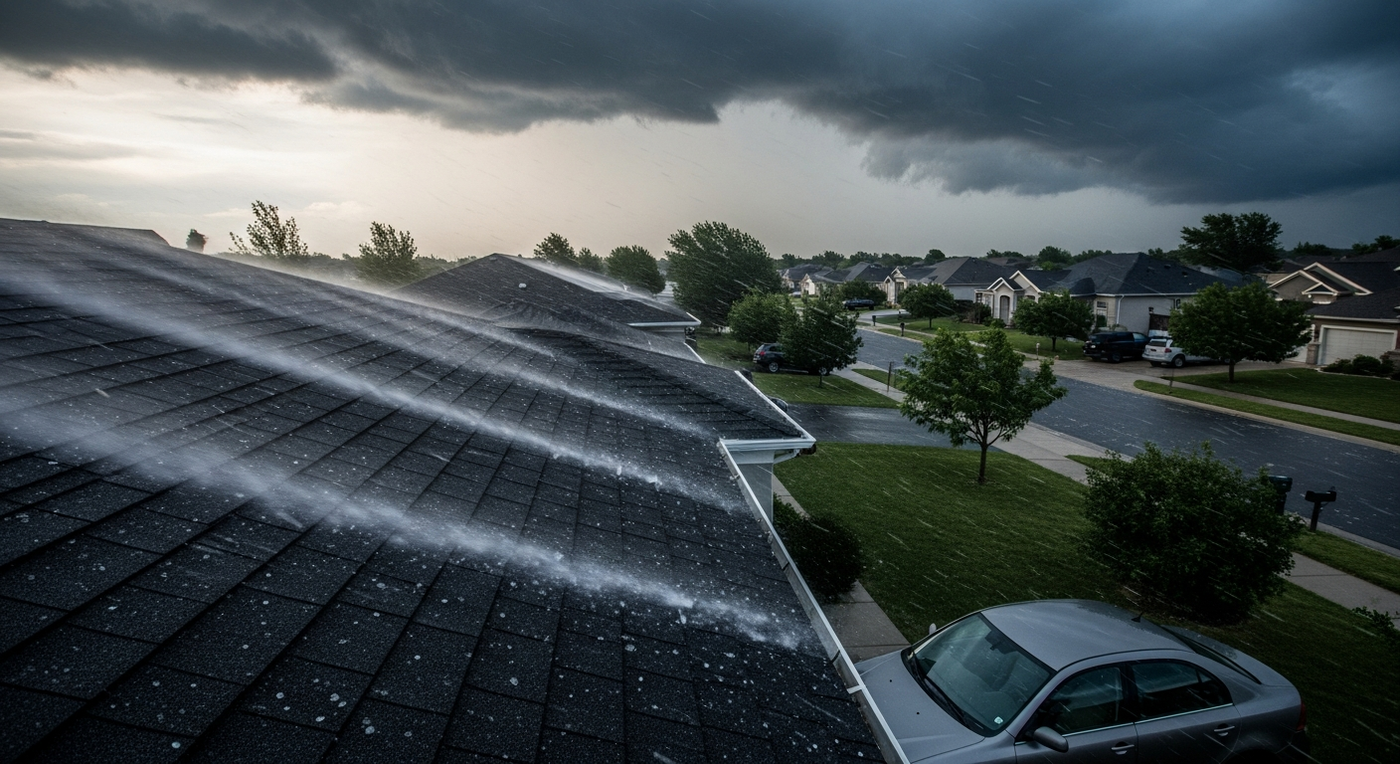
The Mechanics of High-Altitude Hail
Wyoming's mean elevation sits at approximately 6,700 feet, making it the second-highest state in the nation after Colorado. This altitude places much of Wyoming's surface closer to the freezing level where hail embryos form, but more importantly, it positions the state directly beneath the jet stream's most volatile corridor during late spring and early summer.
The jet stream—the river of high-altitude winds that steers weather systems—dips southward across Wyoming during the transition months between winter and summer. In June, the jet often sits directly overhead, creating powerful wind shear that organizes thunderstorms into rotating supercells. These are the storms that produce the largest hail, the kind that punches through windshields and dents truck hoods into abstract sculpture.
But elevation and jet stream position alone don't explain Wyoming's hail frequency. The terrain does the rest.
The Laramie Range, the Medicine Bow Mountains, the Bighorn Range—these north-south oriented mountain chains act as atmospheric trip wires. When moist air from the east encounters these barriers, it's forced upward rapidly. This orographic lifting creates localized zones where updrafts strengthen dramatically within a few miles. A garden-variety thunderstorm approaching from the plains can transform into a severe hail producer within twenty minutes of hitting the foothills.
Cheyenne, the state capital, sits at the northern terminus of Colorado's Front Range urban corridor, positioned precisely where storms that build over the Palmer Divide and the Laramie Range converge. The city averages around seven to nine days per year with hail—a frequency that matches or exceeds Denver's despite having one-tenth the population. The difference is that when Denver gets hail, a million people notice.
Here's what surprises most meteorologists when they first study Wyoming's severe weather patterns: the state's hail season is compressed into an incredibly narrow window. An estimated 70-80% of significant hail events occur between mid-May and early July, with the peak falling in the first three weeks of June. This concentration happens because Wyoming needs a precise combination of ingredients that only align during late spring—jet stream energy overhead, sufficient moisture advection from the Gulf of Mexico, and strong surface heating to break the cap that holds storms in check.
Before mid-May, the atmosphere is still too cold and dry. After mid-July, the jet stream retreats northward into Canada and the monsoon pattern shifts moisture flow away from the state. But during those six weeks in late spring, Wyoming becomes an atmospheric laboratory for hail production.