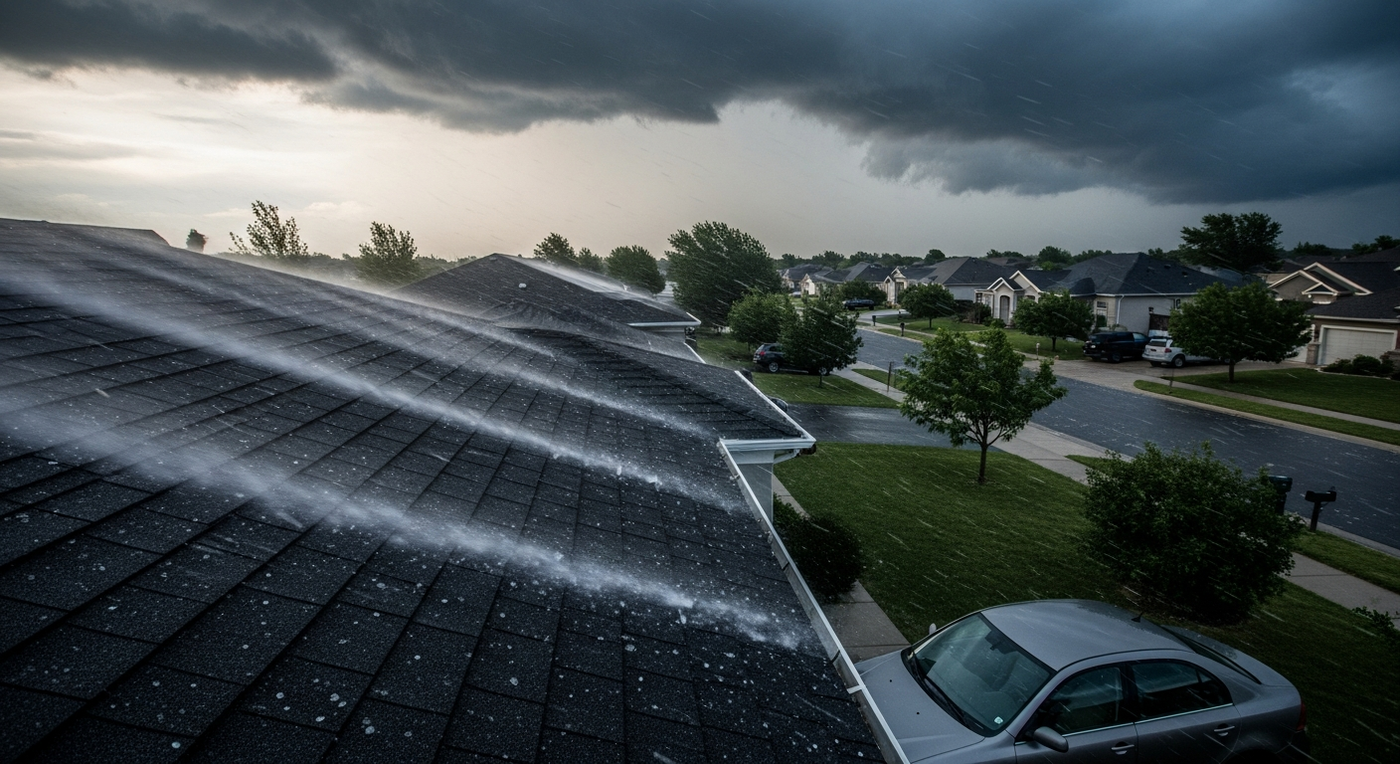
The warm sector geometry that aims storms at Wichita
Most severe weather in Wichita arrives between 3 PM and 9 PM during May and June, and the timing isn't coincidental. Classic Plains cyclones — low-pressure systems that develop lee of the Rockies — position Wichita in what meteorologists call the warm sector during peak heating hours. Cold fronts sweep southeast out of Colorado and the Texas Panhandle while warm, moist air surges north from Oklahoma and the Gulf. Wichita sits at the intersection.
This setup favors discrete supercells rather than squall lines. A squall line is a continuous band of storms, often 100+ miles long, where individual cells compete for the same inflow of warm air. Discrete supercells are isolated rotating thunderstorms with dedicated inflow streams — they're the storms that produce giant hail because they can devote all their energy to a single, powerful updraft. Wichita's position in the warm sector, combined with the dryline that often sets up just to the west, creates an environment where these isolated monsters form and then track directly over the city.
Kansas City, by comparison, sits farther north and east. Storms approaching KC from the west often encounter the Flint Hills — not mountains, but enough terrain variation to disrupt low-level wind flow and sometimes undercut a supercell's inflow. Wichita has no such buffer. The Chisholm Trail once ran through here precisely because the land was so flat that cattle could be driven for days without encountering an obstacle. That same openness is why a supercell born near the Colorado border can arrive in Wichita with its mesocyclone still perfectly organized.
The aviation and manufacturing economy compounds the exposure. Spirit AeroSystems, Textron Aviation, and Airbus all operate major facilities in Wichita with vast employee parking lots. A typical shift change at Spirit puts roughly 4,000 vehicles in open-air parking between 2 PM and 4 PM — exactly when afternoon heating is triggering supercell development to the west. Hail damage to a single vehicle can run several thousand dollars when windshields, hoods, and roofs are involved. A single severe hailstorm crossing these facilities during working hours can generate insurance claims potentially reaching tens of millions of dollars.
Here's what most people get wrong about hail timing: they assume the danger peaks when storms are closest. In Wichita, the highest risk often occurs 30-60 minutes *before* the storm arrives, when the outflow boundary — a surge of cool air pushed ahead of the storm — triggers panic decisions. Drivers see the wall cloud approaching and rush to move vehicles under overpasses or into parking garages that are already full. The National Weather Service has documented this behavior during post-storm surveys: people abandon vehicles on highway shoulders or in turn lanes, creating traffic snarls that trap other drivers in the open when hail begins.