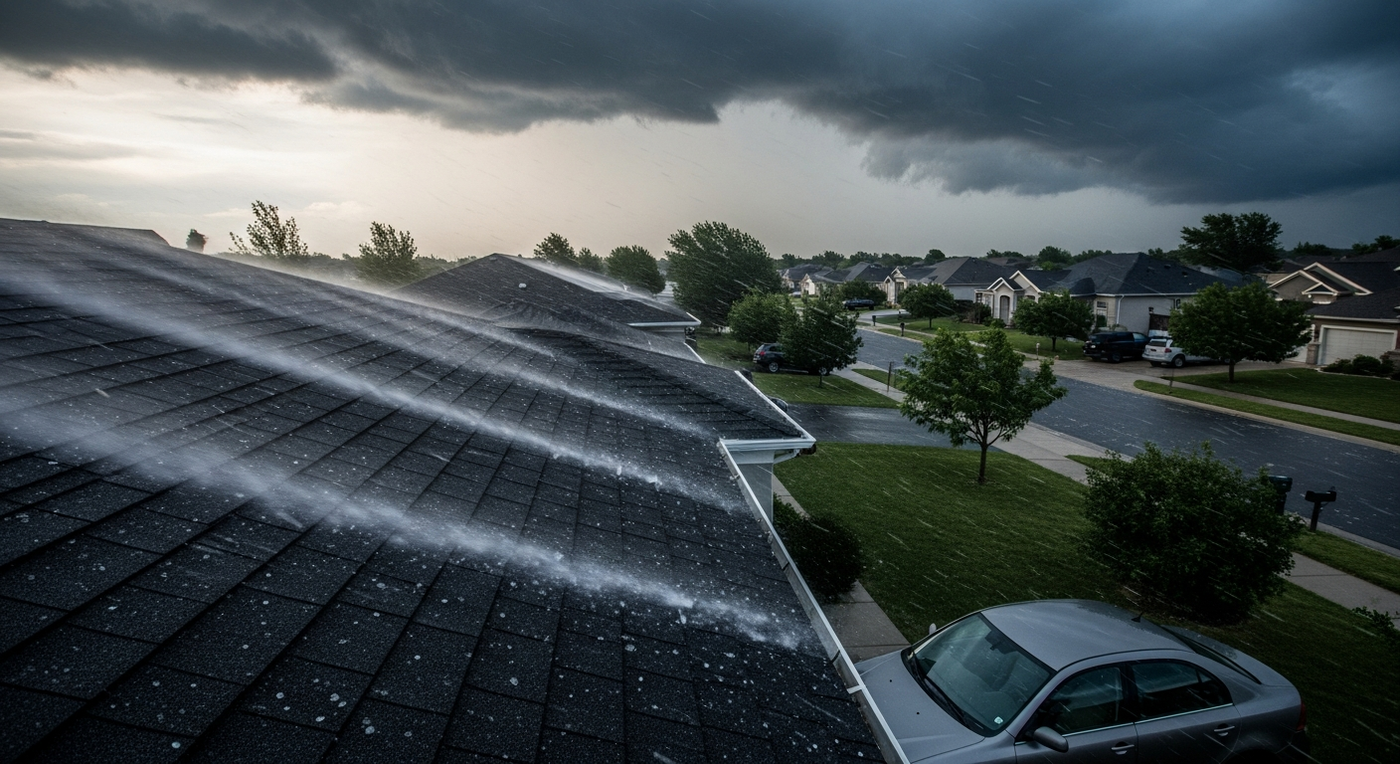
The Atmospheric Assembly Line
The dryline typically sets up in a north-south orientation from the Texas Panhandle through western Oklahoma during spring afternoons. As surface heating intensifies, the boundary sharpens—dry air from the Chihuahuan Desert undercuts Gulf moisture, creating a near-invisible wall in the atmosphere where dewpoints can drop 30 degrees in a quarter mile. Storms that form on the dryline don't just get tall; they get organized. The wind shear present in the environment—the change in wind speed and direction with height—causes updrafts to rotate, and rotating updrafts are extraordinarily efficient at lofting water droplets into the hail-growth zone.
Here's what most people get wrong: hail doesn't form because it's cold aloft. The top of a Great Plains supercell in May can reach 50,000 feet with temperatures around minus 60 degrees Celsius, but that's not what makes the hail large. Size comes from updraft strength and residence time. A hailstone needs to cycle through the storm multiple times, accumulating layers of ice like an atmospheric jawbreaker, and that requires an updraft powerful enough to suspend a chunk of ice against gravity. Supercells along the I-44 corridor regularly produce updrafts exceeding 100 mph.
The turnpike itself runs almost due northeast from Oklahoma City, which happens to align closely with the typical motion vector of May supercells in central Oklahoma. Storms don't follow roads, but they do follow the mean wind, and the upper-level southwesterly flow that dominates during severe weather setups pushes storms on a heading that often parallels the interstate. If you're driving from OKC to Tulsa on a May afternoon with towering cumulus in your rearview mirror, there's a non-trivial chance that storm is going to track along your route.