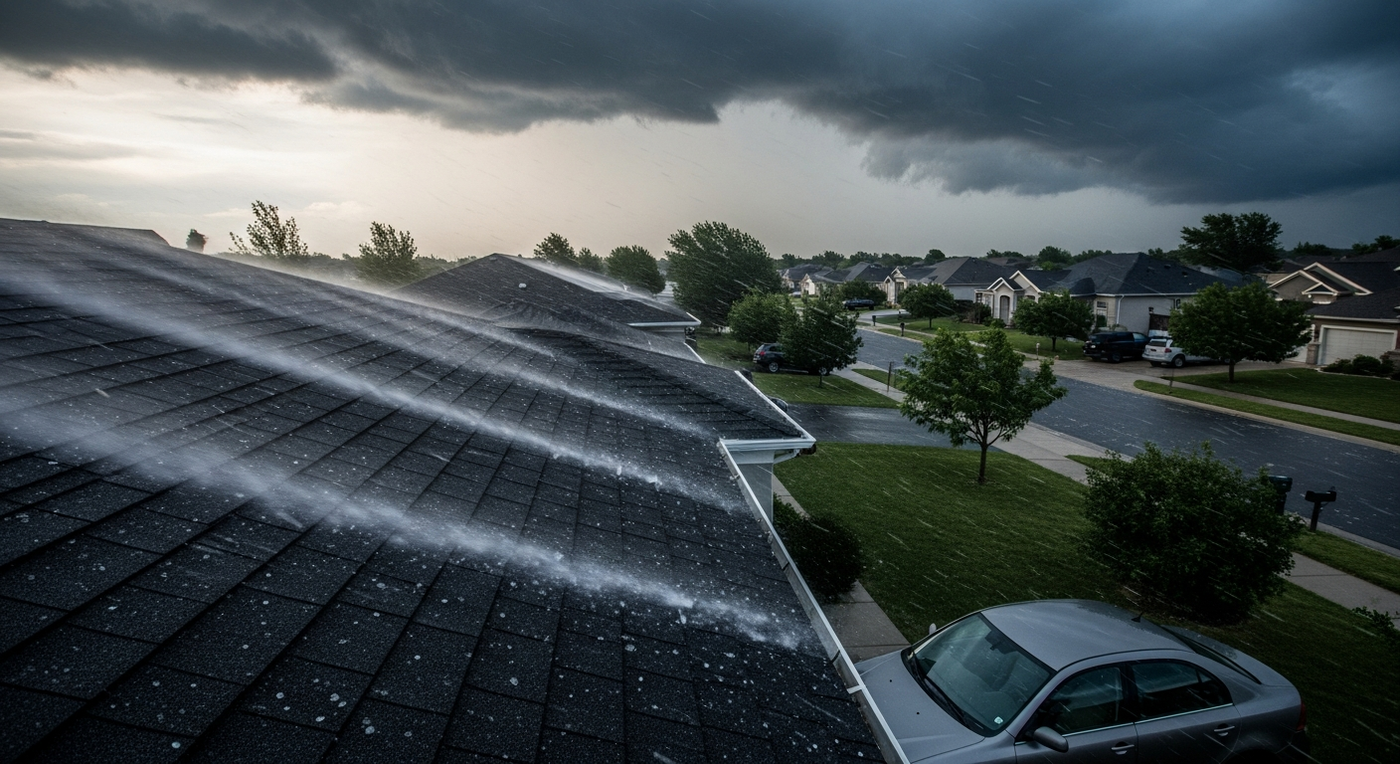
The Appalachian Supercell Factory
The Southeast gets its hail the same way the Plains do: supercell thunderstorms with powerful updrafts that suspend and recirculate ice until it grows large enough to overcome the updraft and fall. The difference is geography and timing.
According to Storm Prediction Center research, the Southeast's peak hail season runs from March through early May, when the jet stream still dips far enough south to bring strong wind shear over the region. At the same time, Gulf moisture surges northward, creating the unstable air mass supercells need. The Appalachian foothills provide just enough terrain variation to enhance lift along boundaries where different air masses collide.
What makes Southeast supercells particularly nasty is that they often form in the late afternoon or early evening, when the atmosphere has had all day to destabilize. They mature quickly, drawing on that deep Gulf moisture, and they frequently produce hail in the transition zone between the coastal plain and the mountains—exactly where Atlanta, Birmingham, and Greenville sit.
The storms don't form along a dryline like Plains supercells do. Instead, they develop along cold fronts or outflow boundaries from earlier storms, sometimes in lines, sometimes as discrete cells. The environment can support giant hail—stones larger than two inches in diameter—because the combination of moisture, instability, and wind shear occasionally rivals anything found in Oklahoma or Kansas during May.
Here's what most people get wrong: they assume the Southeast is too humid, too warm, or too far from "tornado alley" to produce serious hail. But humidity actually helps supercells. More moisture means more latent heat release, which means stronger updrafts, which means larger hail. The Southeast's proximity to the Gulf of Mexico is an advantage for hail production, not a limitation.
Research from the National Severe Storms Laboratory has documented numerous Southeast hail events with stones exceeding three inches—larger than baseballs. These aren't statistical outliers. They're part of a regular pattern that repeats every spring, particularly across northern Georgia, northern Alabama, and upstate South Carolina.