The Atmospheric Mechanics Behind the Shift
The eastern creep of severe hail isn't random. It tracks changes in where and when the ingredients for supercells come together: moisture, instability, wind shear, and a trigger mechanism to kick off convection.
Spring and early summer severe weather in the central U.S. depends on a collision of air masses—warm, humid Gulf moisture surging north, cool dry air spilling off the Rockies, and the jet stream providing the upper-level energy to spin up rotating storms. Historically, that battleground sat over Kansas, Nebraska, and Oklahoma. But NOAA climate data shows the northern edge of consistent Gulf moisture transport has been reaching farther into the Ohio Valley during May and June over the past two decades, while the jet stream's position during severe weather setups has trended slightly farther north and east.
The result: more days per year when Chicago and Indianapolis sit in the warm sector instead of on the cool side of the boundary. That matters enormously. Storms that form in the warm sector—ahead of a cold front or dryline—have access to deep moisture and strong wind shear, the recipe for supercells with rotating updrafts that can suspend hailstones long enough for them to grow large. Storms that form on the cool side of the boundary tend to be linear, messy, and hail-poor.
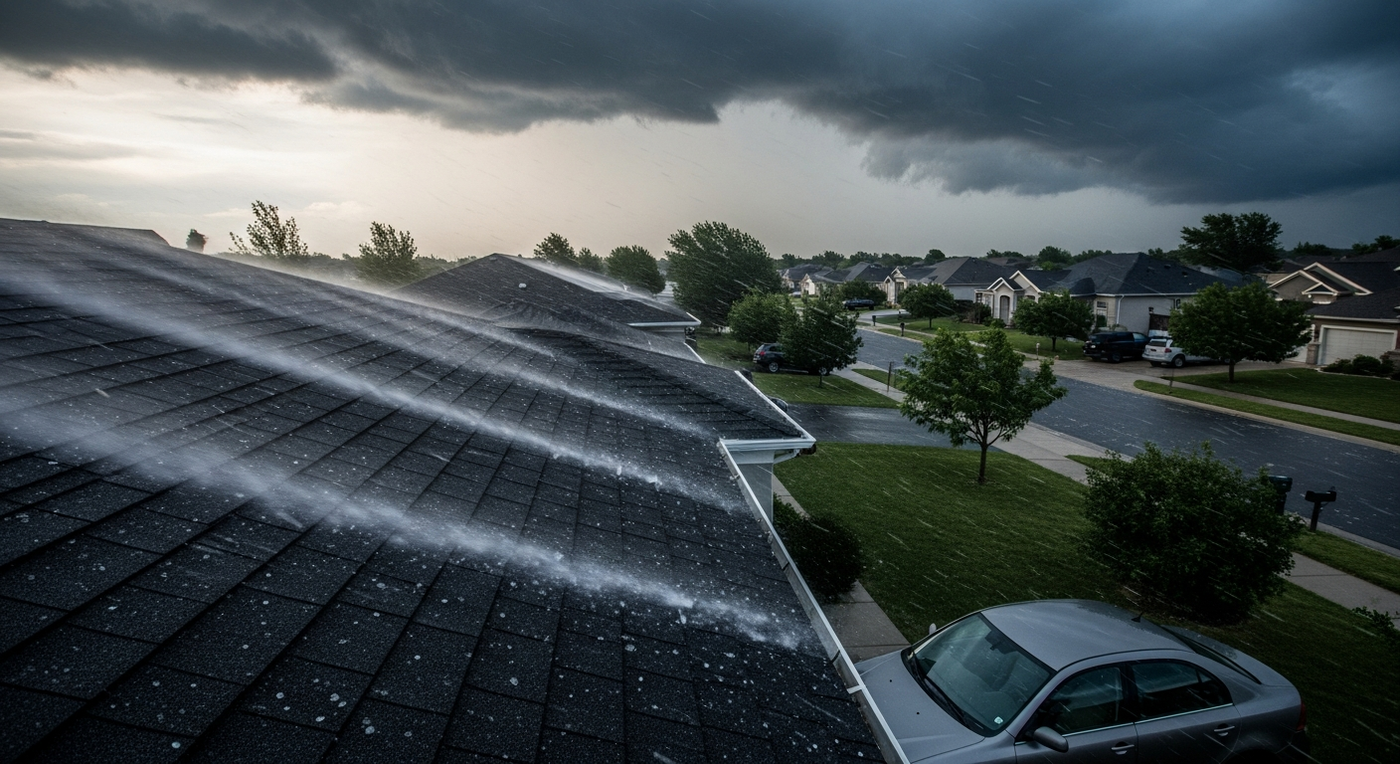
Indianapolis has always had thunderstorms. What's changed is the *type* of thunderstorm and the size of the hail they produce. A city that once saw hail mostly in the quarter-to-golf-ball range—annoying but rarely catastrophic—now faces periodic bombardment by stones large enough to total vehicles and require full roof replacements. Chicago's western suburbs, particularly DuPage and Kane counties, have logged multiple significant hail events since 2015, including a June 2015 outbreak that caused an estimated several hundred million dollars in damage across the metro area, according to NOAA storm data.
The insurance industry has noticed. Carriers writing homeowners policies in Illinois and Indiana have quietly begun adjusting their exposure models. Some have raised deductibles specifically for hail claims or introduced percentage-based wind/hail deductibles (typically 1-2% of home value) similar to those common in coastal hurricane zones. Others have simply pulled back from writing new policies in the collar counties around Chicago and Indianapolis, treating them more like hail-prone territories than the low-risk Midwest markets they were a generation ago.