Explainer Deep Dive

The Rotating Engine: Why Supercell Thunderstorms Are Different Animals

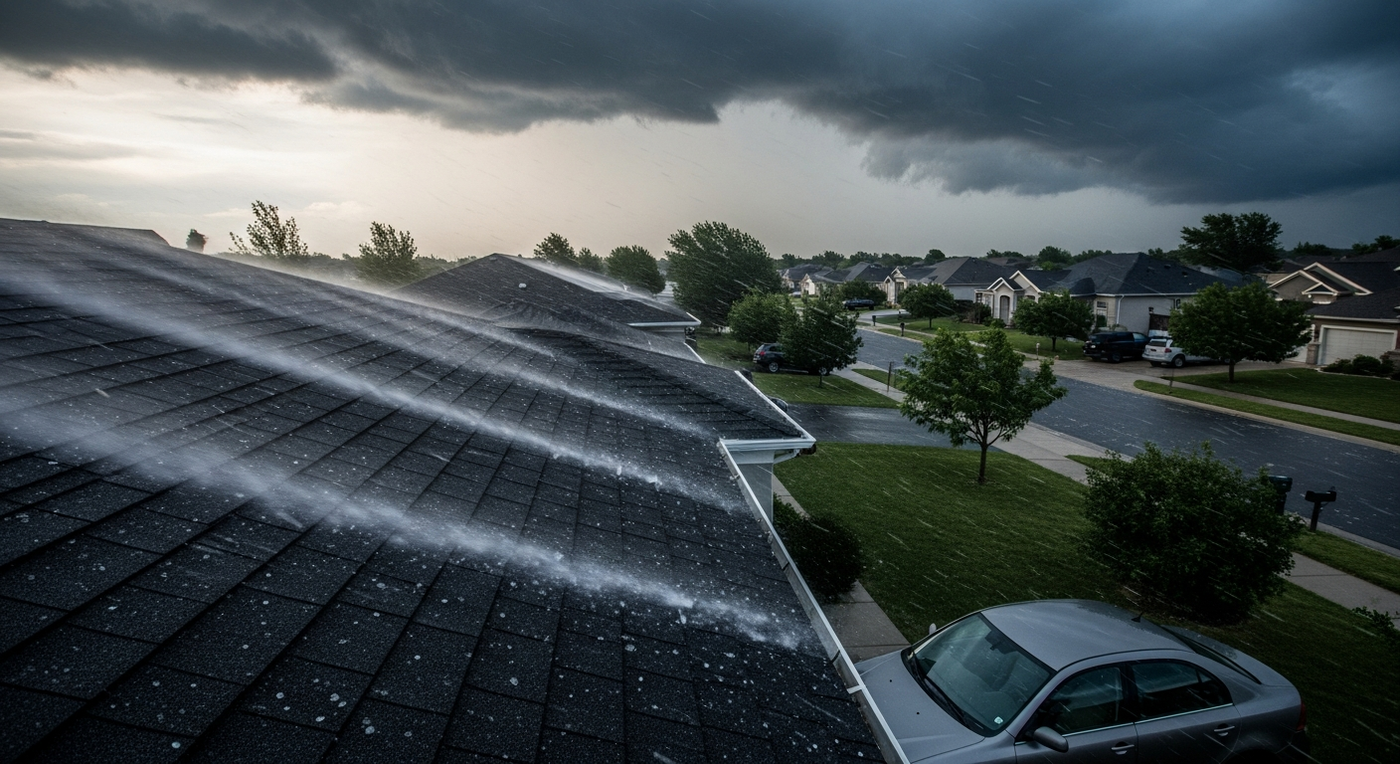
Supercells persist for hours and recycle hailstones through a rotating updraft that ordinary thunderstorms lack entirely.

The Rotating Engine: Why Supercell Thunderstorms Are Different Animals
Hail Protector Editorial / GeminiExplainer

The Lifecycle Problem

Most thunderstorms are self-defeating. They pull warm, moist air upward in an updraft. That air cools, condenses into rain, and the rain falls back down through the same updraft that created it. This downdraft of cool air chokes off the warm inflow, and the storm dies—typically within 30 to 60 minutes of forming.

A supercell solves this problem through geometry. The rotating updraft tilts as it rises, separating the updraft from the downdraft. Warm air feeds into the storm from one side while rain and hail fall out the other side. The storm doesn't suffocate itself. This structural separation allows supercells to persist for an estimated three to six hours, sometimes longer.

The mesocyclone forms when wind shear—winds changing speed or direction with height—causes horizontal rotation in the atmosphere. The updraft tilts this horizontal spin into vertical spin, creating the rotating column. Wind shear is why supercells are most common in the Great Plains during spring: that's where and when you get strong low-level winds from the south colliding with upper-level winds from the west, creating the shear profile supercells need.

Here's the counterintuitive part: supercells don't necessarily look more threatening than ordinary severe thunderstorms. The rotation happens inside the storm, often invisible from the ground unless it tightens into a visible funnel. You can be looking at what appears to be a normal thunderstorm while a mesocyclone is actively recycling hailstones above you.

10%

%

Storms become supercells

90%

%

Major hail from supercells

3-6

hours

Typical supercell lifespan

25-30%

%

Supercells spawning tornadoes

The Hail Factory

The mesocyclone's rotation creates what meteorologists call the bounded weak echo region—a zone where radar shows less precipitation because the updraft is so strong it's holding everything aloft. Hailstones get caught in this updraft, rise until they start to fall, then get caught again and lifted back up. Each trip through the storm adds another layer of ice.

A hailstone in an ordinary thunderstorm might make one or two passes through the growth zone before falling out. A hailstone in a supercell can make five, ten, fifteen trips, growing with each cycle. This is why supercells produce the giant hail—stones exceeding four inches in diameter—that punches holes through roofs and windshields. The stronger the updraft and the longer the stone stays aloft, the larger it grows.

The rotation also organizes where hail falls. Supercells often produce a hail swath—a corridor of damage several miles long and a few hundred yards wide where the largest stones concentrate. This swath typically lies on the right side of the storm's path (relative to its direction of travel) in what's called the right-front quadrant. If you're driving and a supercell is approaching from the southwest, the worst hail usually falls in the southeastern portion of the storm.

Wind speeds inside the mesocyclone can exceed 100 mph in the vertical direction—strong enough to suspend a softball-sized chunk of ice. For context, a two-inch diameter hailstone typically requires updraft speeds around 55-60 mph to stay aloft. A four-inch stone needs updrafts approaching 100 mph. The mesocyclone provides that power.

What This Means Behind the Wheel

The practical difference for drivers is duration and predictability. An ordinary thunderstorm typically crosses your location in fifteen to twenty minutes. You can often wait it out under an overpass or in a parking garage. A supercell might sit over you for an hour or more, producing multiple hail shafts as the mesocyclone cycles.

Supercells also move differently. They often deviate to the right of the prevailing winds, sometimes dramatically. A storm that appears to be tracking northeast might suddenly turn and move almost due east. This right-turning tendency is caused by the mesocyclone's interaction with the wind field—the rotating updraft creates its own pressure perturbations that steer the storm. This makes supercells harder to outrun using simple directional logic.

Radar apps show you precipitation intensity, but they don't always clearly indicate rotation. The National Weather Service issues warnings specifically for supercells—you'll see phrases like "confirmed tornado" or "confirmed large hail" rather than just "severe thunderstorm warning." That language distinction matters. A warning mentioning "golf ball sized hail" or larger is almost certainly describing a supercell.

The visual cues are subtle. Supercells sometimes display a striated appearance—horizontal banding in the cloud structure caused by the rotating updraft. The base of the storm may have a lowered area called a wall cloud where the mesocyclone is located. But these features require clear visibility and some distance to observe. If you're directly underneath the storm, you won't see them.

According to National Severe Storms Laboratory research, supercells account for the vast majority of hailstones exceeding two inches in diameter. For insurance purposes, that's the threshold where damage shifts from cosmetic (paint chips, minor dents) to structural (cracked windshields, punctured metal, broken shingles). The rotation is what enables that size category.

One section of the Great Plains—western Kansas, the Oklahoma Panhandle, and the Texas Panhandle—sees supercells with particular frequency during May and June. The geography funnels moisture from the Gulf of Mexico northward while the jet stream provides upper-level winds, creating the shear environment supercells require. If you're driving through this region during late spring, you're in the epicenter of supercell activity. The storms don't just happen here—they thrive here.

The rotation also means supercells can produce tornadoes, though not all do. According to National Severe Storms Laboratory research, roughly 25-30% of supercells generate tornadoes at some point in their lifecycle. The same mesocyclone that recycles hail can tighten and extend downward. This makes supercells the highest-risk storm type for multiple simultaneous hazards: large hail, damaging winds, and tornadoes all from the same system.

For drivers, the key insight is this: if you're monitoring weather and see a severe thunderstorm warning mentioning rotation, confirmed large hail, or a tornado warning, you're dealing with a supercell. That storm won't behave like the garden-variety thunderstorms you've driven through dozens of times. It will last longer, potentially change direction, and produce hail capable of totaling your vehicle. The rotating updraft is an engine that ordinary thunderstorms simply don't possess.

Why Storm Chasers Target Supercells

The mesocyclone is also why storm chasers focus almost exclusively on supercells. An ordinary severe thunderstorm might produce interesting lightning or heavy rain. A supercell produces structure—the kind of organized, persistent features that make for dramatic footage and scientific data. The rotation creates visual phenomena: beaver tails, inflow bands, clear slots. These aren't just aesthetic differences; they're symptoms of the underlying physics.

Most drivers will never see a supercell's internal structure. What you'll experience is the output: hail that seems to last impossibly long, coming in surges rather than a single burst. Hail that grows larger as the storm continues rather than smaller. A storm that doesn't weaken and move on but instead sits and churns. That persistence is the signature of the rotating updraft doing what ordinary updrafts cannot—sustaining itself by keeping its fuel source separated from its exhaust.

Back to Hail Science