Regional Report Colorado Hail Report

Colorado Springs Hail Repair Costs: What PDR, Panel Work, and Glass Actually Run in the Springs

Paintless dent repair for a full-vehicle hail claim in Colorado Springs typically runs $2,000-5,000 in 2025, with glass replacement and conventional bodywork pushing severe damage bills past $10,000.

Colorado Springs Hail Repair Costs: What PDR, Panel Work, and Glass Actually Run in the Springs
Hail Protector Editorial / GeminiRegional Report

The Technician Shortage Drives PDR Pricing

Colorado Springs has roughly half the certified PDR technicians per capita as the Denver metro—a scarcity that directly affects pricing. A typical full-vehicle PDR job—covering hood, roof, trunk, and multiple panels—runs between $2,000 and $5,000 at established Springs shops in 2025, up roughly 10-15% from 2024 rates.

The math works like this: most shops charge per dent or per panel, with pricing around $75-150 per dent depending on size and location. A moderate hail event might leave 80-120 dents across a sedan. Multiply that out, and you're looking at several thousand dollars even before addressing glass or paint damage.

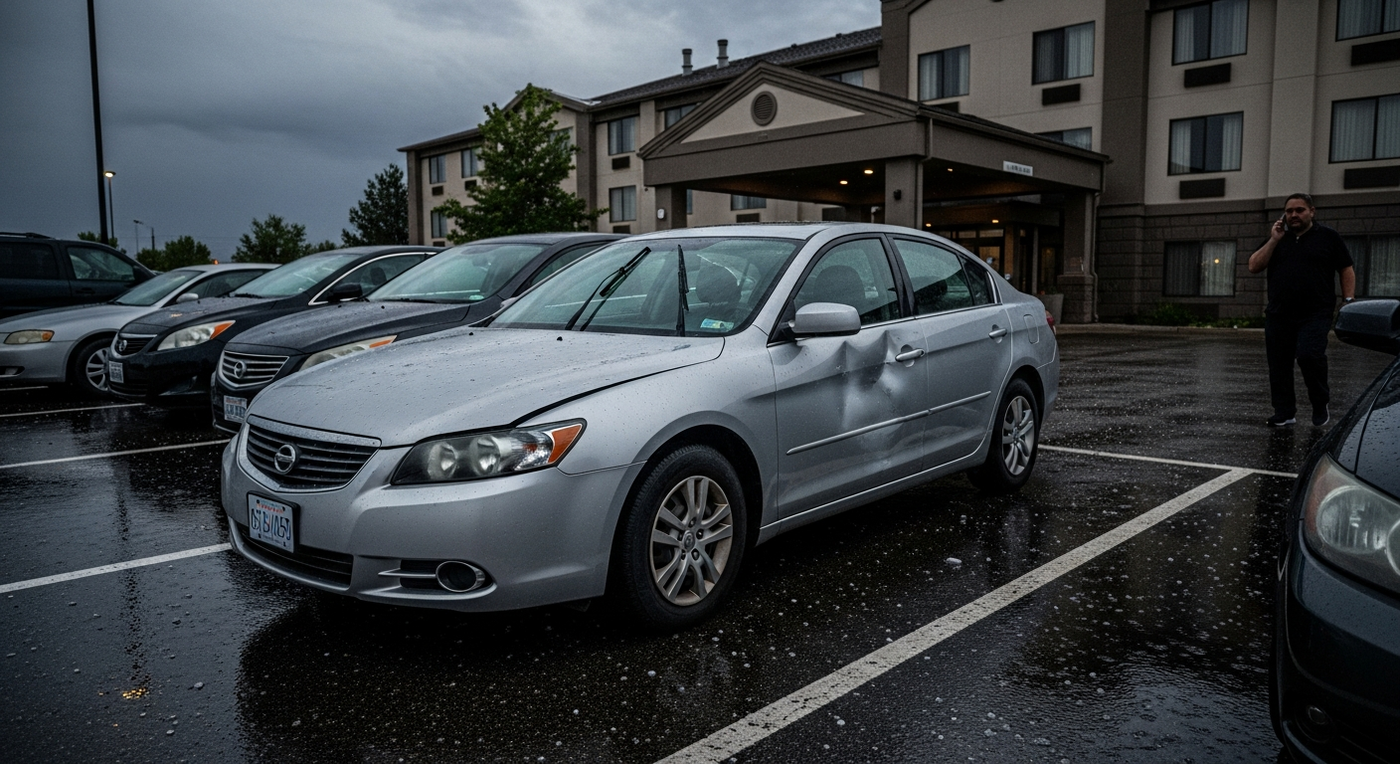
Here's what most people get wrong: they assume PDR is always cheaper than conventional repair. It is—when the damage qualifies. But PDR only works on shallow dents without paint cracking, and Colorado Springs hailstorms frequently produce golf-ball-sized stones that exceed PDR thresholds. Once you cross into cracked paint or creased metal, you're in panel replacement territory.
Panel Replacement and Conventional Bodywork

When hail damage is too severe for PDR, conventional bodywork becomes necessary. In Colorado Springs, panel replacement typically costs $800-1,500 per panel including paint matching and labor. A hood replacement alone often runs $1,200-1,800 at quality shops.

The Springs market has a peculiar split. Established local shops—many operating for 15+ years—charge premium rates but deliver factory-spec repairs with proper paint booth facilities and OEM-certified processes. These shops typically quote 20-30% higher than newer operations, but their work holds up and maintains resale value.

Seasonal operators, by contrast, often set up temporary facilities during peak hail season and undercut established shops by roughly 30%. The quality varies wildly. Some deliver acceptable work; others rush jobs, use aftermarket panels that don't fit properly, or apply paint that doesn't match in different lighting. Insurance adjusters in the Springs report seeing more supplement claims—additional damage discovered during repair—from seasonal shops than established facilities.

Glass Replacement Carries Hidden Costs

Windshield replacement in Colorado Springs runs $300-500 for standard glass, but that figure misleads. Modern vehicles equipped with Advanced Driver Assistance Systems (ADAS) require recalibration after windshield replacement, adding $150-300 to the bill.

The Springs has fewer certified ADAS recalibration facilities than Denver—roughly four shops versus Denver's dozen-plus. This creates scheduling bottlenecks during active hail seasons. Some drivers wait 7-10 days for recalibration appointments, and a few shops add travel surcharges of $50-100 if their mobile calibration unit needs to make a dedicated trip.

Rear glass and side windows add up quickly. A rear windshield typically costs $250-400, while door glass runs $150-250 per window. A severe hailstorm that breaks multiple windows can easily generate $1,500-2,000 in glass claims alone.

The Insurance Deductible Reality

Most Colorado Springs drivers carry $500-1,000 comprehensive deductibles. When total repair costs hit $4,000-6,000—common for moderate hail damage requiring PDR across multiple panels plus one windshield—the out-of-pocket exposure is manageable.

But here's the scenario that catches people: minor damage that falls just above the deductible threshold. If your estimate comes in at $1,200 and you carry a $1,000 deductible, you're paying $1,000 to fix $1,200 worth of damage. Some drivers elect to skip the claim entirely, particularly if they're planning to trade the vehicle soon or if cosmetic dents don't bother them.

The calculus changes with severe damage. A $12,000 repair bill with a $1,000 deductible makes filing obvious. But that middle zone—$1,500-2,500 in damage—creates genuine decision points about whether to file.

Material Costs and Supply Chain Factors

Paint and materials saw price increases of roughly 8-12% between 2024 and 2025. This affects conventional repairs more than PDR, since PDR uses minimal materials beyond specialized tools and lighting.

OEM (Original Equipment Manufacturer) parts cost approximately 20-40% more than aftermarket alternatives, but insurance companies increasingly specify aftermarket parts for non-structural components. Colorado law allows this practice, though insurers must disclose the use of non-OEM parts. Quality aftermarket parts perform adequately, but fit and finish sometimes fall short of factory specifications.

The supply chain for certain specialty glass—particularly for newer luxury vehicles with heads-up displays or acoustic interlayers—remains inconsistent. Some windshields require 2-3 week lead times, extending repair timelines and leaving vehicles vulnerable to additional weather damage.

$2,000-5,000

Full-vehicle PDR typical range

$75-150

per dent

Standard PDR pricing

80-120

dents

Moderate hail event average

Roughly

50% fewer

Certified techs vs Denver

Timing and Seasonal Pricing

Colorado Springs doesn't see dramatic seasonal price swings like some markets, but demand surges after major hail events do affect scheduling. After the May 2024 hailstorm that hit northeast Colorado Springs, wait times at quality PDR shops stretched to 4-6 weeks.

Some shops maintain consistent pricing year-round. Others implement surge pricing during peak demand, adding 10-20% to standard rates when their schedule fills weeks out. This practice remains controversial—insurance adjusters write estimates based on prevailing rates, and shops charging above those rates create out-of-pocket gaps for vehicle owners.

Mobile PDR operators, who work out of vans and travel to customer locations, typically charge 15-25% more than shop-based technicians but offer convenience that many drivers value. For minor damage—10-20 dents on a single panel—mobile service makes sense. For extensive damage requiring multiple days of work, shop facilities provide better lighting and equipment access.

The Quality Versus Speed Tradeoff

Fast repairs and quality repairs don't always align. PDR work done properly requires patience—technicians work dents gradually, checking their progress under specialized lighting, making incremental adjustments. Rushing the process leaves shadows and imperfections visible in certain light.

Colorado Springs shops that promise 24-48 hour turnarounds on significant hail damage often achieve speed by deploying multiple technicians simultaneously or by accepting lower quality thresholds. The best PDR work in the Springs typically takes 3-5 days for full-vehicle repairs, with technicians working methodically panel by panel.

Conventional bodywork takes longer still. Proper paint work requires multiple steps: surface preparation, primer, base coat, clear coat, and curing time between layers. Quality shops in Colorado Springs typically quote 7-10 days for panel replacement jobs, though simple single-panel repairs might complete in 3-4 days.

What Insurance Actually Covers

Comprehensive coverage pays for hail damage minus your deductible, but understanding the claims process prevents surprises. Insurance adjusters write initial estimates based on visible damage, but shops frequently discover additional damage during disassembly—dents hidden under trim pieces, cracked mounting brackets, damaged sensors.

These supplement claims are normal and legitimate, but they extend repair timelines. The shop must document the additional damage, submit a supplement request to the insurance company, wait for approval, and then order any additional parts needed. This process adds 3-7 days to most repairs.

Colorado Springs drivers should photograph their vehicles immediately after hail events, documenting all visible damage before filing claims.

The Diminished Value Question

Here's an uncomfortable truth: even perfect hail repairs diminish resale value. Vehicle history reports flag insurance claims, and many buyers assume hail-damaged vehicles carry hidden problems regardless of repair quality.

Hail-repaired vehicles typically sell for roughly 5-15% less than comparable vehicles without damage history, depending on severity and documentation, according to Insurance Information Institute data. A $30,000 vehicle might lose $1,500-4,500 in resale value even after $8,000 in professional repairs.

Colorado law doesn't require disclosure of hail damage that's been repaired unless it exceeds certain thresholds or affects structural integrity, but Carfax and AutoCheck reports reveal insurance claims regardless. Some Springs dealers won't accept hail-history vehicles as trade-ins, while others discount their offers significantly.

This reality affects the repair-versus-total-loss calculation. If repair costs approach 60-70% of vehicle value, some owners prefer the total loss payout despite the inconvenience of vehicle shopping, knowing that a repaired vehicle carries permanent value impairment.

Choosing Shops in Colorado Springs

The Springs market includes an estimated 30-40 shops advertising hail repair services, but capability varies enormously. Certifications matter: look for I-CAR Gold Class certification (indicating ongoing training), manufacturer certifications for specific brands, and membership in professional organizations like the Alliance for Automotive Innovation or state body shop associations.

Reviews help, but interpret them carefully. A shop with 200+ reviews averaging 4.5 stars provides more reliable signal than a shop with 15 five-star reviews. Pay attention to negative reviews mentioning specific problems—paint matching issues, incomplete repairs, poor communication—rather than isolated complaints about pricing or wait times.

Ask potential shops about their warranty policies. Reputable Colorado Springs facilities typically warranty PDR work for as long as you own the vehicle and conventional repairs for 2-5 years. Shops unwilling to provide written warranties raise red flags.

Get multiple estimates, but understand that the lowest bid often signals problems. A shop quoting $2,500 when three others quote $4,000-4,500 for identical damage either missed something, plans to use inferior materials, or intends to pressure you for supplements later. Pricing should cluster within roughly 15-20% across legitimate shops.

Verified Sources

  1. NOAA Storm Prediction Center

    NOAA Storm Prediction Center

    Official severe-weather outlook reference.

Back to Storm Prep