Editorial Quick Answers

Your Hail-Repaired Car Is Worth Less Than the Estimate Suggests — And You Can Claim That Difference

Even after flawless bodywork, a vehicle with hail damage history loses resale value, and most insurance policies allow you to recover this "diminished value" if you file a separate claim within the right window.

Your Hail-Repaired Car Is Worth Less Than the Estimate Suggests — And You Can Claim That Difference
Hail Protector Editorial / GeminiEditorial

The Gap Between Fixed and Whole

A 2022 Toyota Camry with a clean history sells for one price. The same Camry, repaired perfectly after hail damage with all new panels and fresh paint, sells for less — sometimes thousands less. The repair made the car functional and cosmetically identical, but it didn't make the car whole.

The problem is that an estimated 95% of hail damage victims never file a diminished value claim. They accept the repair estimate, get the work done, and move on. The insurance company closes the file. Three years later, when trading in the vehicle, the owner discovers the CarFax report shows hail damage and the dealer knocks several thousand dollars off the offer. By then, the claim window has closed.

Diminished value isn't theoretical. It's the documented difference between pre-loss market value and post-repair market value for an otherwise identical vehicle.
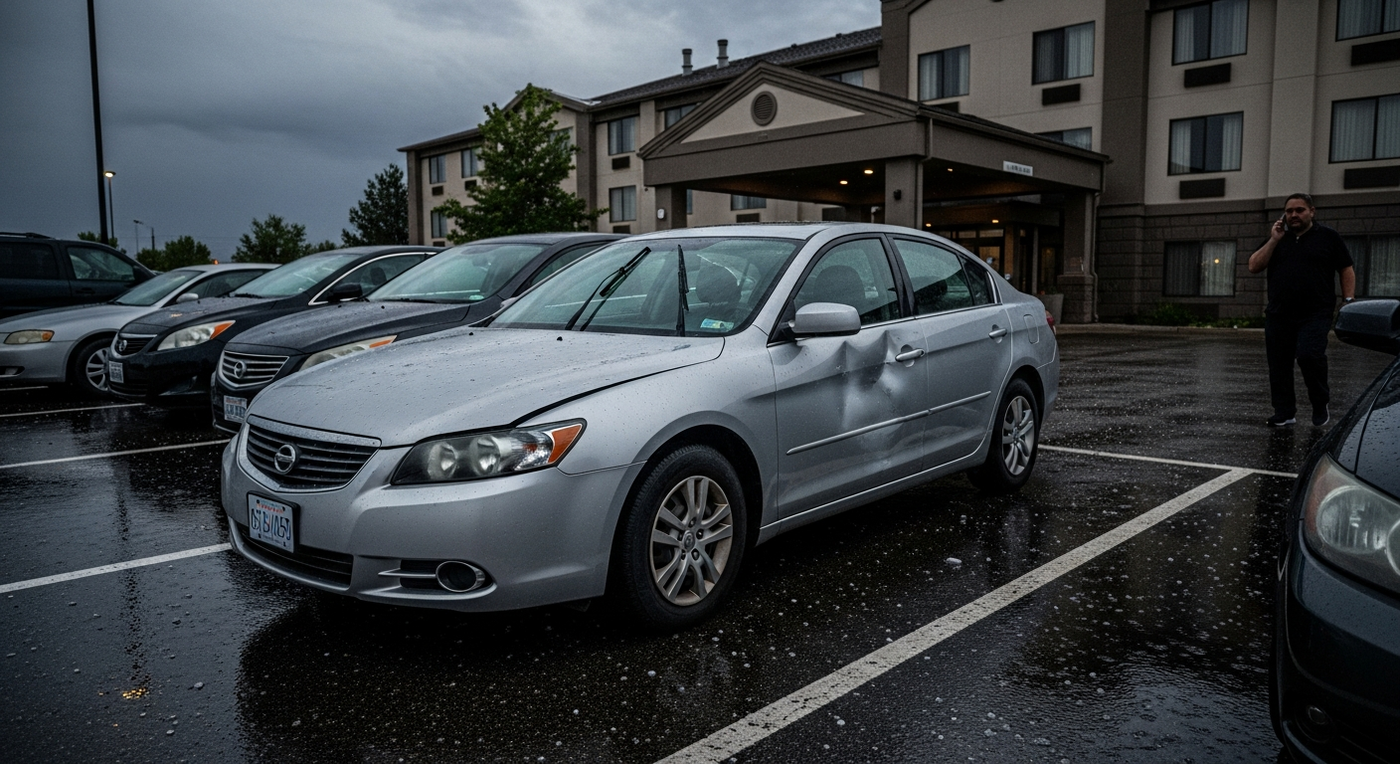
Georgia's Formula and Everyone Else's Chaos

In 2001, the Georgia Supreme Court ruled in *Mabry v. State Farm* that diminished value is a recoverable element of property damage. More importantly, Georgia's subsequent case law established a calculation method called the 17c formula: take the pre-loss value, apply a 10% base diminished value, then multiply by damage severity and mileage factors. A $30,000 car with moderate hail damage and 40,000 miles might yield a diminished value claim of approximately $2,100 using this formula.

Georgia is the only state with this level of clarity. Everywhere else, diminished value law exists in a patchwork of case precedents, insurance regulations, and claim-by-claim negotiations. Most states recognize the concept under first-party (your own collision coverage) or third-party (at-fault driver's liability coverage) claims, but few provide a standard formula. This ambiguity works in the insurer's favor — if there's no formula, there's no obvious "correct" payout, which means the insurer can lowball and most claimants won't know the difference.

Here's what makes hail claims unusual: there's no at-fault party. You're filing against your own comprehensive coverage, which means you're negotiating with your own insurer, who has every incentive to minimize the payout and no legal adversary forcing them to be generous. In a collision claim, the at-fault driver's insurer knows you could lawyer up. In a hail claim, you're just asking your insurance company to pay you more money for damage they've already fixed. The power dynamic is lopsided.

The Appraisal That Pays for Itself Twelve Times Over

Third-party diminished value appraisals typically cost between $250 and $500. The appraiser inspects the vehicle, reviews the repair invoices, pulls comparable sales data, and produces a report quantifying the loss in market value. These appraisals typically recover an additional $2,000 to $8,000 in claim value on average — a return on investment that few other post-accident actions can match.

The appraisal works because it shifts the burden of proof. Without documentation, your claim is an opinion. With a certified appraisal, your claim is a professional valuation backed by market data, and the insurer has to either accept it or produce their own competing appraisal. Most don't bother. They'll negotiate downward from your appraised figure, but they rarely reject it outright if the methodology is sound.

Timing matters. Most policies require diminished value claims within approximately one to three years of the loss date, and some states impose even tighter windows. You don't need to file immediately — it's often smarter to wait until repairs are complete so the appraiser can inspect the finished work — but waiting until you're ready to sell the car is too late. File within six months of repair completion and you're safely inside every statute of limitations.

Not every hail claim justifies the appraisal cost. A 12-year-old sedan with 140,000 miles and pre-existing cosmetic issues has minimal diminished value because it had minimal market value to begin with. The sweet spot is typically vehicles less than five years old, under 60,000 miles, with clean pre-loss histories. These cars had strong resale value before the hail, which means they have significant diminished value after repair.

95

%

never pursue diminished value

$2,000-$8,000

average recovery amount

$250-$500

third-party appraisal cost

What Insurers Don't Volunteer

Insurance companies are not required to inform you that diminished value claims exist. They're required to pay valid claims you file, but they're under no obligation to suggest claims you haven't thought of. This creates an information asymmetry: the adjuster knows diminished value is compensable, and they know you probably don't know, and their job is to close your file as cheaply as possible.

Some insurers will include a diminished value line item in the initial estimate, particularly in Georgia where the law is unambiguous. Everywhere else, it's on you to ask. The phrase that triggers the process is: "I'd like to file a diminished value claim under my comprehensive coverage." Not "Is diminished value covered?" — which invites a discouraging answer — but a declarative statement that you're filing a claim.

Expect the first offer to be low. Insurers often open with approximately 40-60% of the appraised value, assuming most claimants will accept rather than negotiate. Counter with your appraisal and documentation. If they stall, mention that you're considering hiring a public adjuster or attorney. The math changes quickly when the insurer realizes you're serious — paying your diminished value claim is cheaper than defending against a bad-faith lawsuit.

The CarFax Problem Nobody Mentions

Here's the detail that surprises people: even if you never file an insurance claim, hail damage can still appear on a vehicle history report. If a body shop runs the VIN through their estimating software, or if a dealership appraises the car for trade-in, those database queries can generate records that aggregators like CarFax pick up. You can't repair hail damage invisibly.

This matters because diminished value isn't just about what a future buyer *sees* — it's about what they *know*. A flawless repair job might pass visual inspection, but the history report doesn't care how good the bodywork looks. It shows "hail damage reported" and the resale value drops accordingly. Which means even if you're tempted to skip the insurance claim and pay out of pocket to avoid a record, you're not actually avoiding the record. You're just eating the repair cost *and* the diminished value.

The smarter play: file the claim, get the repair covered, then file the diminished value claim to recover what the history report will cost you later. You're going to take the resale hit either way.

When the Claim Is Worth More Than the Repair

Occasionally, diminished value exceeds repair cost. A light hail storm might cause roughly $1,800 in cosmetic damage to a two-year-old luxury vehicle, but the fact that the car now has a damage history could reduce its resale value by several thousand dollars. The repair brings the car back to pre-loss condition cosmetically, but it doesn't bring it back to pre-loss condition financially.

This creates a perverse outcome: you're better off with the hail damage on record than without it, because the insurance payout (repair plus diminished value) exceeds the actual loss in utility. The car drives the same, looks the same after repair, but you've been compensated for a loss that only materializes years later when you sell. It's one of the few scenarios in insurance where the policyholder can come out ahead, which is precisely why insurers don't advertise the option.

Not all policies cover diminished value equally. Some exclude it for first-party claims but allow it for third-party. Some cap it at a percentage of the vehicle's actual cash value. Read your declarations page or call your agent and ask explicitly: "Does my comprehensive coverage include diminished value, and are there any caps or exclusions?" If the answer is vague, request it in writing. Adjusters forget conversations.

Verified Sources

  1. NOAA Storm Prediction Center

    NOAA Storm Prediction Center

    Official severe-weather outlook reference.

Back to Storm Prep