Regional Report Colorado Hail Report

Colorado Springs Hail Repair: What PDR Actually Costs and How to Spot Storm Chaser Scams

Colorado Springs sees an average of nine hail days per year, creating a $40+ million annual repair market where legitimate shops compete with transient operators who disappear before warranty claims surface.

Colorado Springs Hail Repair: What PDR Actually Costs and How to Spot Storm Chaser Scams
Hail Protector Editorial / GeminiRegional Report

The Actual Cost Structure for PDR in the Springs

Paintless dent repair pricing in Colorado Springs typically ranges from approximately $1,800 to $4,500 for comprehensive vehicle repairs following a hail event. Individual dent repairs typically start around $75 to $125 per dent, but most hail damage involves dozens or hundreds of impacts across multiple panels.

The pricing depends on three factors: dent count, panel accessibility, and whether the paint has cracked. A sedan's hood with 40 dents might cost approximately $800 to $1,200 to repair, while a roof with similar damage could run roughly $1,500 to $2,000 because technicians must remove interior components to access the metal from behind. Aluminum panels—increasingly common on trucks and SUVs—typically add roughly 30% to repair costs compared to steel because the metal requires different tools and techniques.

Colorado Springs prices align closely with Denver's market, but the Springs has fewer certified PDR shops per capita. This creates longer wait times after major storms, sometimes stretching to 6-8 weeks during peak season.
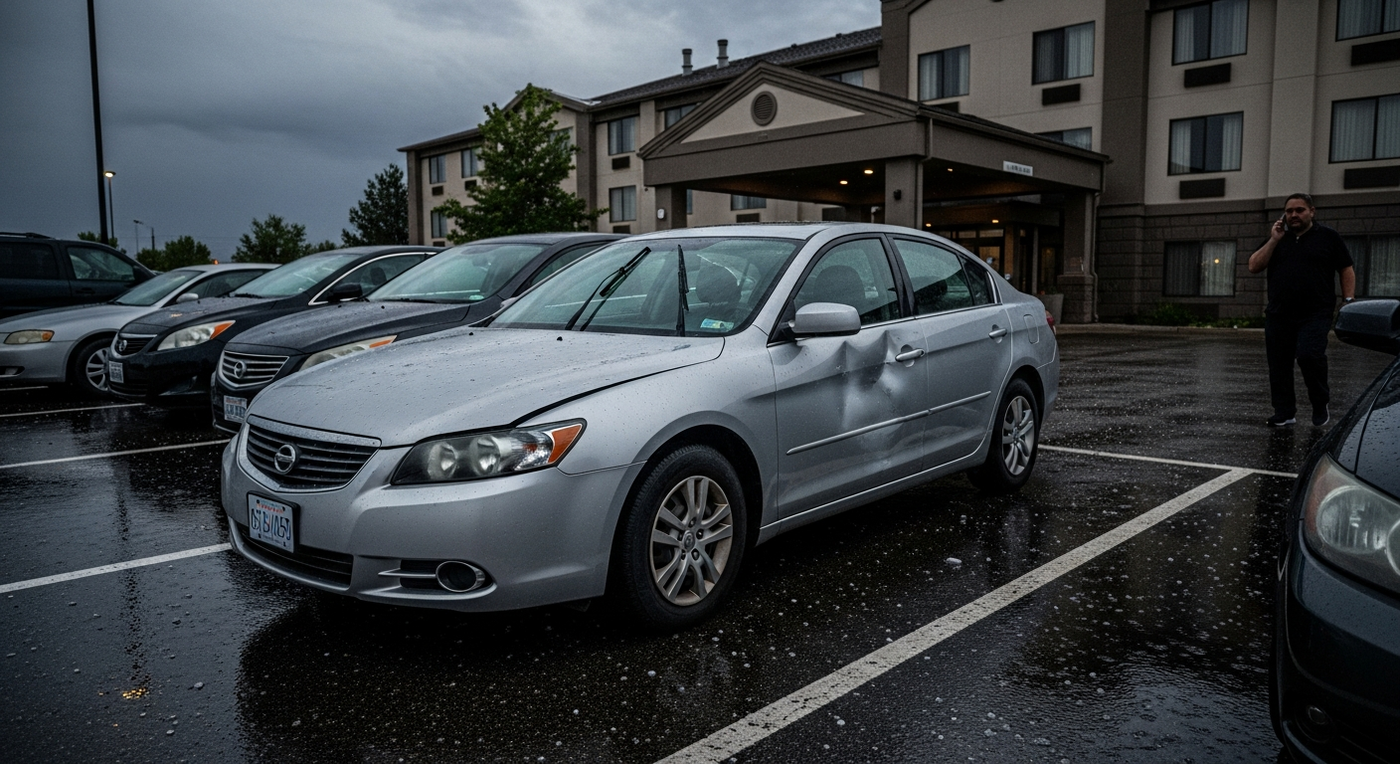
Why Storm Chasers Target This Market

Within 48 hours of a significant hail event, out-of-state operators arrive in Colorado Springs with door-to-door solicitation campaigns. They set up temporary operations in hotel parking lots, offer same-week repairs, and present prices that undercut established shops by 20% to 40%.

The economics make sense from their perspective: they're avoiding the overhead of permanent facilities, year-round staffing, and local business licenses. They complete repairs quickly, collect insurance checks, and move to the next storm system before quality issues emerge.

The problem surfaces weeks or months later. Paint that looked smooth initially develops spider-web cracking because the technician pushed too hard. Dents that appeared fixed return as the metal's memory reasserts itself—a sign the repair didn't properly relieve the metal's stress. And when customers try to file warranty claims, the phone numbers connect to disconnected lines.

The 72-Hour Verification Process

Before signing any repair agreement, spend three days verifying the shop's legitimacy. This timeline matters because storm chasers pressure customers to commit immediately, claiming insurance deadlines or limited availability.

First, confirm a permanent physical address. Visit the location—not a hotel parking lot, not a temporary tent setup, but an actual commercial facility with signage, equipment, and staff. Legitimate shops maintain Colorado business licenses and can provide documentation showing at least two years of continuous operation at their current address, according to Better Business Bureau guidance.

Second, request three references from repairs completed more than six months ago. Storm chasers can't provide aged references because they weren't in the market six months prior. Call those references and ask specifically about warranty service: did the shop honor its commitments when issues appeared later?

Third, examine the written warranty. Legitimate operators provide lifetime warranties on PDR work because properly executed repairs don't fail. The warranty should specify the shop's physical address, outline the claims process, and include language about transferability if you sell the vehicle. If the warranty is verbal or printed on generic paper without letterhead, walk away.

What Insurance Companies Actually Recommend

Insurance carriers maintain preferred vendor lists, but these relationships don't always benefit policyholders. Some insurers steer customers toward high-volume shops that offer quick turnaround but inconsistent quality. Other insurers genuinely vet their network shops for certification and customer satisfaction.

You're not required to use your insurer's recommended shop. Colorado law allows policyholders to choose any licensed repair facility. The insurer must pay for repairs at prevailing market rates regardless of which shop you select.

That said, insurance adjusters can identify storm chaser operations because they see the pattern repeatedly. If your adjuster specifically warns against a particular vendor, take that seriously. Adjusters have no financial incentive to steer you wrong—they're paid the same regardless of which shop completes the work.

The Certification Question Most People Skip

Here's what most vehicle owners get wrong: they assume all PDR technicians have equivalent training. In reality, the skill gap between a certified technician with thousands of hours of experience and someone who completed a weekend course is massive.

Ask about specific certifications. The National Association of Collision and Automotive Repair Specialists offers PDR certification programs that require demonstrated proficiency. The Paintless Dent Repair Technicians Alliance maintains a registry of certified professionals. Shops employing certified technicians display credentials prominently because certification represents a competitive advantage.

Storm chasers rarely employ certified technicians. Their business model depends on speed and volume, not craftsmanship. They hire workers who can produce passable results quickly, then move to the next market before the shortcuts become apparent.

The Aluminum Problem Nobody Mentions

Colorado Springs' vehicle fleet includes a high percentage of Ford F-150s, Chevy Silverados, and other trucks with aluminum body panels. Aluminum requires completely different PDR techniques than steel—different tools, different pressure, different heat management.

Many storm chaser operations lack aluminum-specific training. They apply steel techniques to aluminum panels, creating repairs that look acceptable initially but develop problems within months. The metal work-hardens incorrectly, paint adhesion fails, and the panel develops a wavy texture visible in certain light.

Before committing to any shop, ask explicitly about their aluminum PDR experience. Request examples of aluminum repairs they've completed, ideally on vehicles similar to yours. If they claim aluminum and steel repairs are "basically the same," find a different shop.

9

days

Annual hail events

$40

M+

Yearly repair market

30%

%

Aluminum panel premium

6-8

weeks

Peak season wait

Wait Time Reality After Major Events

Colorado Springs typically experiences its worst hail between May and August. After a significant event affecting thousands of vehicles, even legitimate shops typically face 4-6 week backlogs. Storm chasers exploit this frustration by offering immediate service.

The wait is worth it. A proper PDR repair takes time—technicians work methodically, checking their progress under specialized lighting, ensuring each dent is fully relieved without over-working the metal. Rushing the process produces inferior results that fail prematurely.

Some shops offer loaner vehicles or rental car assistance during extended waits. Others provide mobile service, picking up your vehicle and returning it when repairs are complete. These accommodations cost the shop money, which is another reason storm chasers don't offer them—they're optimizing for speed and profit, not customer convenience.

The Insurance Check Trap

Storm chasers often request that customers sign over their insurance checks before repairs begin. This creates a scenario where the operator has your money but no legal obligation to complete quality work.

Legitimate shops work differently. They typically request a deposit (often the insurance deductible), complete the repairs, then collect the balance. Some shops bill the insurance company directly, requiring no upfront payment from the customer beyond the deductible.

Never sign over your full insurance check to any repair facility before work is completed and inspected. If a shop insists on this arrangement, it's a significant red flag. Colorado law protects consumers in these situations, but recovering money from an out-of-state operator who's already moved to the next market is practically impossible.

What Happens When Storm Chasers Leave

The real cost of storm chaser repairs often emerges 8-12 months later when you attempt to sell or trade your vehicle. Dealerships and private buyers inspect for prior damage, and poorly executed PDR work is obvious under the right lighting conditions.

Paint that's been over-worked shows a pebbled texture. Dents that weren't fully relieved create subtle depressions visible at certain angles. Panel gaps that weren't properly restored after interior component removal indicate rushed work. These issues can reduce your vehicle's resale value by hundreds or thousands of dollars—far more than you "saved" by choosing the storm chaser's lower price.

Some buyers walk away entirely when they discover evidence of substandard hail repair, viewing it as a sign of other hidden problems. The short-term savings become long-term losses.

The Better Business Bureau Tells You Everything

The Better Business Bureau's Colorado Springs office maintains complaint records that reveal patterns. Before selecting any repair shop, check their BBB profile for unresolved complaints, response patterns, and length of time in business.

Storm chaser operations typically have no BBB presence because they operate under constantly changing business names. When complaints accumulate under one name, they dissolve that entity and create a new one. Established shops, by contrast, maintain years of BBB history showing how they handle disputes and warranty claims.

Pay particular attention to complaints about warranty service. A shop might have a handful of complaints—that's normal for any business serving thousands of customers. What matters is whether they responded professionally and resolved the issues. No response or defensive responses suggest a shop that won't stand behind its work.

Verified Sources

  1. NOAA Storm Prediction Center

    NOAA Storm Prediction Center

    Official convective outlook archive and risk categories.

  2. bbb.org

    bbb.org

    Referenced in article via bbb.org.

Back to Storm Prep