Seasonal Guide Seasonal Briefing

The 2025 Hail Season: When Severe Weather Became Everyone's Problem

America's third consecutive year of widespread, costly hail damage confirmed that severe convective storms are no longer just a Great Plains concern.

The 2025 Hail Season: When Severe Weather Became Everyone's Problem
Hail Protector Editorial / GeminiSeasonal Guide

The Geography Changed

The most striking pattern of 2025 wasn't the intensity of individual storms—though several produced hail exceeding four inches in diameter—but rather where those storms occurred.

Traditional Hail Alley states still dominated the raw count. Colorado, Nebraska, and Kansas logged their expected seasonal totals, with the Front Range corridor experiencing multiple significant events between April and July. But the Southeast and lower Midwest saw hail activity that would have been considered anomalous a decade ago and is now becoming routine.

Tennessee recorded eleven separate hail events producing stones larger than two inches between March and June, according to NOAA's Storm Prediction Center. Northern Alabama saw damaging hail on multiple distinct dates. Southern Indiana, central Illinois, and portions of Missouri experienced what NOAA's Storm Prediction Center characterized as "above-normal severe convective activity" throughout the peak season months.

The geographic expansion matters because these regions contain millions of vehicles that were never parked with hail in mind. Homes in Nashville and Huntsville weren't built with hail-resistant roofing. Apartment complexes in Evansville don't have covered parking structures. The infrastructure assumes hail is rare enough to be treated as bad luck rather than a recurring threat.

When severe weather becomes routine in places that lack the physical infrastructure to handle it, losses amplify. A hailstorm in Amarillo might damage plenty of vehicles, but many of those vehicles sit in garages or under carports during warned events. The same storm in Chattanooga finds cars parked in open lots, unprotected driveways, and street parking—because until recently, there was no reason to build differently.

Markets that experienced their second or third significant hail event in as many years saw claim volumes spike disproportionately higher than first-time affected areas, according to insurance industry data. Policyholders who'd filed claims in 2023 or 2024 were more likely to have deployed protective measures in 2025—moving vehicles, using covers, or parking in structures when warnings were issued. Those experiencing their first major event often had no preparation plan in place.
$55

billion

2025 storm losses projected

35-40%

%

repair cost increase since 2020

~20%

%

vehicles totaled in major events

85-90%

%

damage reduction with hail covers

The Costs Kept Climbing

Here's what most people get wrong about hail damage costs: they assume the increase is primarily about storm intensity. Bigger hail, bigger bills. But the 2025 season demonstrated that vehicle technology is driving repair costs upward independent of hail size.

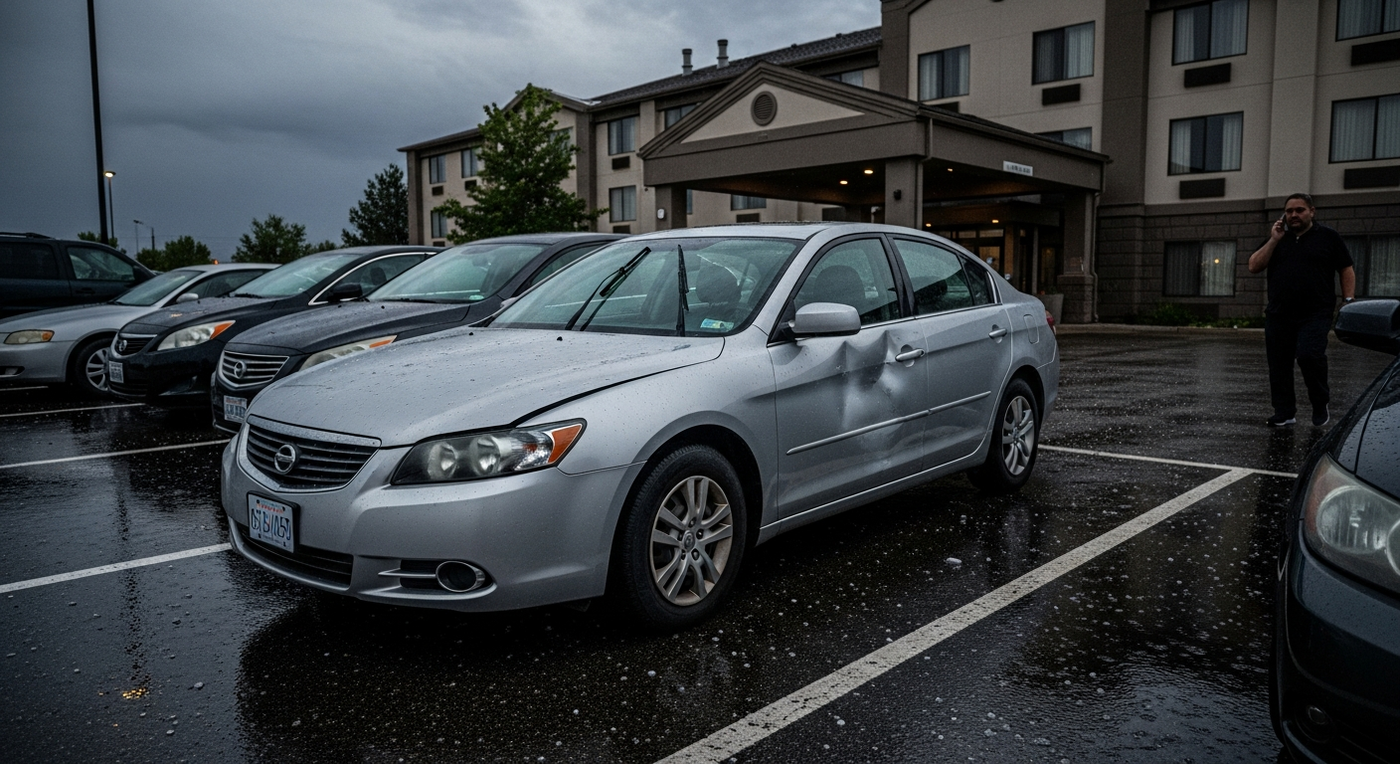
A golf-ball-sized hailstone striking a 2015 sedan might crack a windshield, dent the hood, and require paintless dent repair on the roof and trunk. Total repair cost: typically several thousand dollars, based on industry repair estimates. That same stone striking a 2024 model with aluminum body panels, a panoramic moonroof, adaptive cruise control sensors in the grille, and lane-keeping cameras behind the windshield? The repair estimate can exceed $12,000, and in many cases pushes the vehicle into total-loss territory.

The aluminum panel issue became particularly visible during the 2025 season. Ford's F-150, America's best-selling vehicle, has featured an aluminum body since 2015. By 2025, a substantial portion of the national vehicle fleet includes aluminum construction—not just trucks, but SUVs and sedans from manufacturers across the board. Aluminum doesn't respond to paintless dent repair the way steel does. Panels often require complete replacement rather than manipulation.

Add in the ADAS complexity. Those adaptive headlights aren't just bulbs in a housing—they're motorized assemblies with sensors and control modules. The camera behind the rearview mirror isn't a $200 part; it's a calibrated system that requires specialized equipment to replace and align. When hail cracks the windshield, you're not just replacing glass. You're replacing and recalibrating a suite of interconnected safety systems.

The average hail damage claim in 2025 ran approximately 35-40% higher than equivalent damage would have cost in 2020, even controlling for general inflation. The technology premium is real, and it's compounding.

Several major hail events in 2025 produced total-loss rates of approximately 20% of affected vehicles—meaning one in five damaged cars was deemed uneconomical to repair. That's not because the hail was catastrophically large. It's because the math changed. When repairs approach 70-75% of a vehicle's actual cash value, and the vehicle is three or four years old with existing depreciation, the total-loss threshold arrives quickly.

What Worked, What Didn't

The 2025 season offered a natural experiment in preparation effectiveness. Three years into elevated hail activity, some vehicle owners had developed response protocols.

The data is unambiguous: preparation mattered enormously.

Vehicles protected by purpose-built hail covers during warned events experienced significantly lower damage rates than uncovered vehicles in the same geographic area, with some studies showing reductions of 85-90%. That's not surprising—physical barriers work. But the more interesting finding involved behavioral patterns around warning response.

Policyholders who actively monitored Storm Prediction Center outlooks and moved vehicles into covered parking when moderate or high-risk days were forecast reduced their damage exposure substantially. Not to zero—some storms developed faster than forecast, or struck areas outside the predicted risk zone—but enough to make the effort worthwhile. Insurance companies began noticing that certain ZIP codes showed dramatically lower claim rates during events than surrounding areas with similar housing stock and vehicle demographics. The difference: those areas had higher rates of garage parking and more residents who actively responded to severe weather warnings.

Conversely, the "I'll take my chances" approach proved expensive. Comprehensive coverage deductibles typically range from $250 to $1,000, but even a $500 deductible becomes significant when you're filing claims in multiple years. Some policyholders who filed hail claims in both 2024 and 2025 saw premium increases of approximately 15-25% depending on their insurer and state regulations. A few faced non-renewal notices in high-risk ZIP codes.

The coverage gap issue persisted throughout 2025. Drivers carrying only liability coverage—either by choice or economic necessity—absorbed the full cost of hail damage. In markets where used car prices remained elevated despite broader economic cooling, a repair bill of several thousand dollars on a moderately-valued vehicle created genuine financial hardship. Some owners drove damaged vehicles indefinitely. Others sold them at significant loss to buyers willing to accept cosmetic damage.

One pattern emerged clearly: the gap between prepared and unprepared widened with each successive event. First-time hail victims often had no cover, no plan, and no awareness that their area faced recurring risk. Second-time victims had usually acquired covers and developed some monitoring habits. By the third event, they were checking SPC outlooks days in advance and had established relationships with covered parking facilities.

The Insurance Industry Adjusted

Insurers spent 2025 recalibrating their models and their appetites.

Several national carriers announced they were restricting new comprehensive coverage policies in specific ZIP codes across Colorado, Texas, Oklahoma, and portions of the Southeast. Not canceling existing policies—state regulations generally prevent that—but declining to write new business in areas where hail frequency and severity data suggested unsustainable loss ratios.

Premium adjustments followed predictable patterns. Markets experiencing their first significant hail event saw modest increases in the following renewal cycle—typically in the range of 8-12% for comprehensive coverage. Markets hit multiple times in consecutive years saw more substantial adjustments, sometimes in the range of 20-30% depending on the insurer's overall book of business and state regulatory constraints.

The deductible conversation shifted noticeably. More insurers began offering—or in some cases requiring—percentage-based deductibles for comprehensive coverage in high-risk areas. Instead of a flat $500 deductible, policyholders might face a 2% or 5% deductible calculated against the vehicle's actual cash value. On a $30,000 vehicle, a 2% deductible means paying approximately $600 out of pocket before coverage kicks in. The structure transfers more risk to the policyholder and reduces the insurer's exposure on smaller claims.

Some regional carriers experimented with seasonal deductible structures: higher deductibles during peak hail months (April through July), lower deductibles the rest of the year. Uptake was limited—most drivers prefer consistent terms—but the products exist as a hedge against concentrated seasonal losses.

Interestingly, usage-based insurance programs that track vehicle location began incorporating hail-risk scoring. If your telematics device shows you consistently park in covered structures during high-risk forecast periods, some insurers will offer modest premium credits. The technology enables granular risk assessment in ways that weren't possible even five years ago.

Looking Forward From Year Three

The 2025 season didn't break new ground so much as confirm the ground had already shifted.

Hail is no longer a regional curiosity. It's a national exposure that affects insurance pricing, vehicle design considerations, and infrastructure planning. Automakers are beginning to discuss hail-resistant materials and protective design features—not for specialty vehicles, but for mainstream models sold into markets with documented hail frequency.

Some commercial parking operators in hail-prone cities started installing permanent protective canopy structures in 2025, marketing covered parking as a premium amenity. Monthly rates for covered spots in Dallas, Denver, and Oklahoma City increased by approximately $30-50 over uncovered alternatives—a premium many vehicle owners willingly paid after experiencing damage.

The building code conversation is happening slowly, but it's happening. Several municipalities in Texas and Colorado began discussing requirements for covered parking in new multi-family residential construction. Implementation remains years away—building codes change glacially—but the fact that the discussion is occurring at the city planning level represents a shift in how communities think about hail risk.

For individual vehicle owners, the lesson of three consecutive active seasons is straightforward: hail isn't going away, preparation has measurable value, and insurance coverage decisions carry long-term financial implications. The difference between a modest deductible and full replacement cost is the difference between an inconvenience and a financial crisis.

The 2025 season also highlighted the importance of documentation and immediate action. Policyholders who photographed damage within 24 hours, filed claims promptly, and obtained multiple repair estimates generally experienced smoother claims processes than those who delayed. Insurance companies are handling record claim volumes; being organized and proactive moves your claim through the queue faster.

Perhaps the most significant shift is psychological. In 2023, widespread hail damage in non-traditional markets felt like an anomaly. By 2025, it feels like the new normal. Drivers in Tennessee and Alabama now check severe weather outlooks the way drivers in Oklahoma have for decades. That behavioral adaptation—the recognition that hail is a routine risk requiring routine precautions—may prove more important than any single storm or loss total.

The storms will keep forming. The technology in our vehicles will keep getting more complex and expensive to repair. The question isn't whether hail will continue to be a problem. The question is whether we'll continue adapting our behavior, our infrastructure, and our risk management strategies to match the reality the last three seasons have made abundantly clear.

Verified Sources

  1. Insurance Information Institute

    Insurance Information Institute

    Insurance context for auto losses and claims impact.

  2. NOAA Storm Prediction Center

    NOAA Storm Prediction Center

    Official convective outlook archive and risk categories.

  3. NOAA Storm Prediction Center

    NOAA Storm Prediction Center

    Storm report archive with severe hail event records.

  4. National Weather Service

    National Weather Service

    Public guidance on severe thunderstorm and hail safety.

Back to Storm Prep