Editorial Quick Answers

The $8,000 Mistake: Why Most Three-Car Families Park the Wrong Vehicle in the Garage

When hail threatens and you own three vehicles but have one covered spot, the financially correct choice is usually the opposite of what most households do instinctively.

The $8,000 Mistake: Why Most Three-Car Families Park the Wrong Vehicle in the Garage
Hail Protector Editorial / GeminiEditorial

The Triage No One Practices Until It's Too Late

Your weather app pings at 2 PM with a severe thunderstorm warning. You have 90 minutes before the storm arrives. You own a 2022 Ford F-150 ($52,000), a 2019 Honda CR-V ($28,000), and a 2011 Toyota Camry ($8,500). Your garage fits one vehicle.

Most families pull in whichever car is easiest to move or the one they like best. This snap decision often costs thousands more than necessary when hail damage strikes the wrong vehicle. The financially optimal choice requires knowing three numbers most car owners can't recite: current market value, comprehensive deductible, and replacement cost exposure.

The math matters because hail damage doesn't scale linearly. A storm that causes damage to the truck typically causes similar dollar amounts to the CR-V — hail doesn't discount its destruction based on vehicle age. But your financial exposure differs wildly depending on which vehicle takes the hit.
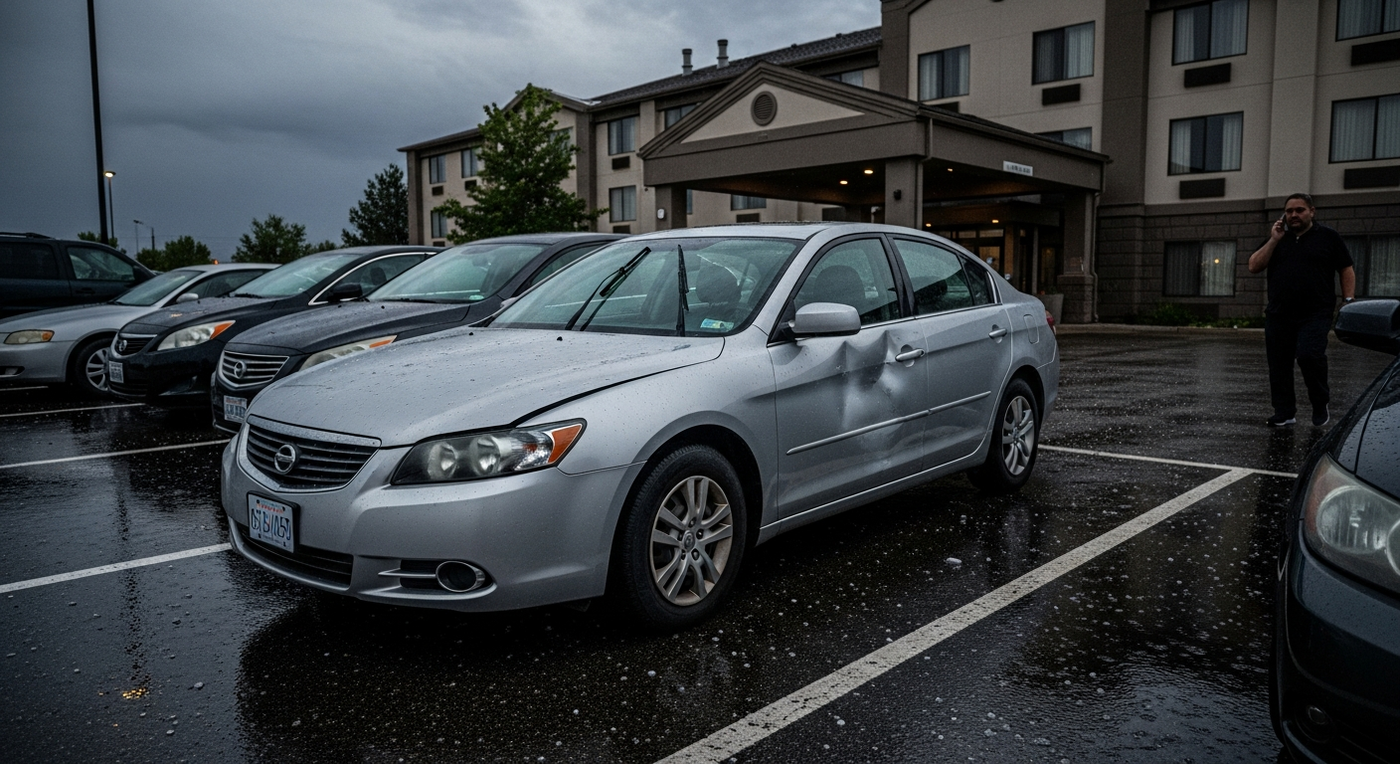
The Deductible-to-Value Ratio Most People Ignore

The vehicle that deserves garage priority isn't necessarily the most expensive one. It's the one where the gap between your comprehensive deductible and likely repair cost creates maximum financial pain.

Consider typical comprehensive deductibles. Many newer financed vehicles carry $500 deductibles. Paid-off older cars often have $1,000 deductibles because owners raised them to lower premiums. A 2011 Camry worth $8,500 with a $1,000 deductible has limited downside — if hail damage totals the car, you're out the deductible but you collect the actual cash value. The vehicle was depreciating anyway.

Now examine the F-150. With a $500 deductible and a $52,000 replacement cost, moderate hail damage of around $6,000 means you pay $500 and insurance covers the rest. But here's what shifts the calculation: paintless dent repair costs have increased roughly 40% since 2019. What used to be an estimated $3,500 repair now typically runs $5,000-plus. Comprehensive claims can trigger rate increases — typically around 10-15% at renewal, though this varies significantly by insurer and state.

The CR-V sits in the middle: enough value to matter, but not enough to justify the same protection priority as the truck. Unless your deductibles are inverted.

When the Old Car Actually Wins Priority

Here's the scenario that flips conventional wisdom: you carry a $250 deductible on the 2011 Camry because you never bothered to raise it, and a $1,000 deductible on the F-150 because you wanted lower premiums on an expensive vehicle.

Suddenly the Camry becomes the garage priority. Why? A hail-totaled Camry with a $250 deductible would net you approximately $8,250 in your pocket. That's enough to buy another equivalent vehicle. The same storm hitting the F-150 with a $1,000 deductible means you're paying that grand plus accepting a diminished value hit — even after repairs, a truck with a hail damage history on its Carfax typically loses roughly 10-20% of resale value.

Most people assume expensive equals protect-first. But deductible structure matters more than sticker price when you're making a 90-minute triage decision.

The Portable Cover Math That Changes Everything

A single-car garage doesn't limit you to protecting one vehicle. Portable hail covers for the second and third cars typically cost around $200-$600 depending on size and quality.

The ROI is immediate. One hail event causing approximately $4,500 in damage to an unprotected vehicle means the cover paid for itself roughly 8-15 times over. Even cheaper covers that typically last only 2-3 seasons before degrading make financial sense in hail-prone regions.

The catch: you need 15-20 minutes to deploy them properly. According to National Weather Service guidelines, severe thunderstorm watches typically provide 2-6 hours of lead time, but warnings compress that to 30-60 minutes. This means monitoring weather actively during spring and early summer, not waiting for your phone to alert you.

Quality differences matter enormously. Covers rated for 2-inch hail work fine for pea-to-marble-sized stones but fail catastrophically in golf-ball events. Multi-layer foam covers rated for larger hail typically run $400-$600 but handle the severe events that cause totaled vehicles. Cheap car covers marketed for sun protection offer essentially zero hail protection — they're glorified tarps.

40%

%

Dent repair cost increase

10-20

%

Resale value loss post-hail

10-15

%

Premium hike after claim

The Coordination Problem When Both Adults Are Away

The theoretical optimal choice falls apart when the F-150 is at a job site 40 miles away and the Camry is in the driveway. You can't protect a vehicle you can't reach.

This is where the pre-storm protocol matters. Households in high-frequency hail corridors — the Texas Panhandle, eastern Colorado, central Oklahoma — benefit from a standing plan: on days with elevated afternoon severe weather risk, the highest-value vehicle stays home or parks in covered commercial parking.

Some families run the numbers and decide the coordination hassle isn't worth it. They accept that hail damage is a when-not-if proposition, carry low deductibles on all vehicles, and treat the occasional claim as a cost of living in hail country. This isn't irrational — it's a conscious choice to pay slightly higher premiums in exchange for not monitoring weather radar daily.

The Weird Case for Protecting the Middle Vehicle

Sometimes the mathematically correct answer is the CR-V, not the truck or the Camry.

This happens when the truck is leased with gap insurance (meaning you're protected if it's totaled) and the Camry is worth so little that you'd probably just pocket insurance money and replace it anyway. The CR-V represents your actual financial vulnerability: enough value that totaling it hurts, but you own it outright so there's no gap coverage safety net.

Leased vehicles with comprehensive coverage and gap insurance have capped downside. Your maximum loss is the deductible. The leasing company absorbs diminished value concerns. If you're three months from lease-end anyway, hail damage becomes the lessor's problem, not yours.

Fully depreciated vehicles have limited downside too. A car worth approximately $6,000 with a $1,000 deductible can only cost you $1,000 in a total loss scenario. But the middle-aged vehicle you own outright, still worth an estimated $25,000-$35,000, represents real money you could lose to diminished value even after repairs.

Verified Sources

  1. Storm Prediction Center

    Storm Prediction Center

    Hail frequency climatology data

  2. National Weather Service

    National Weather Service

    Watch versus warning lead times

Back to Storm Prep