Editorial Quick Answers

Your Two-Week Hail Repair Estimate Just Became a Three-Month Wait — Here's the Math

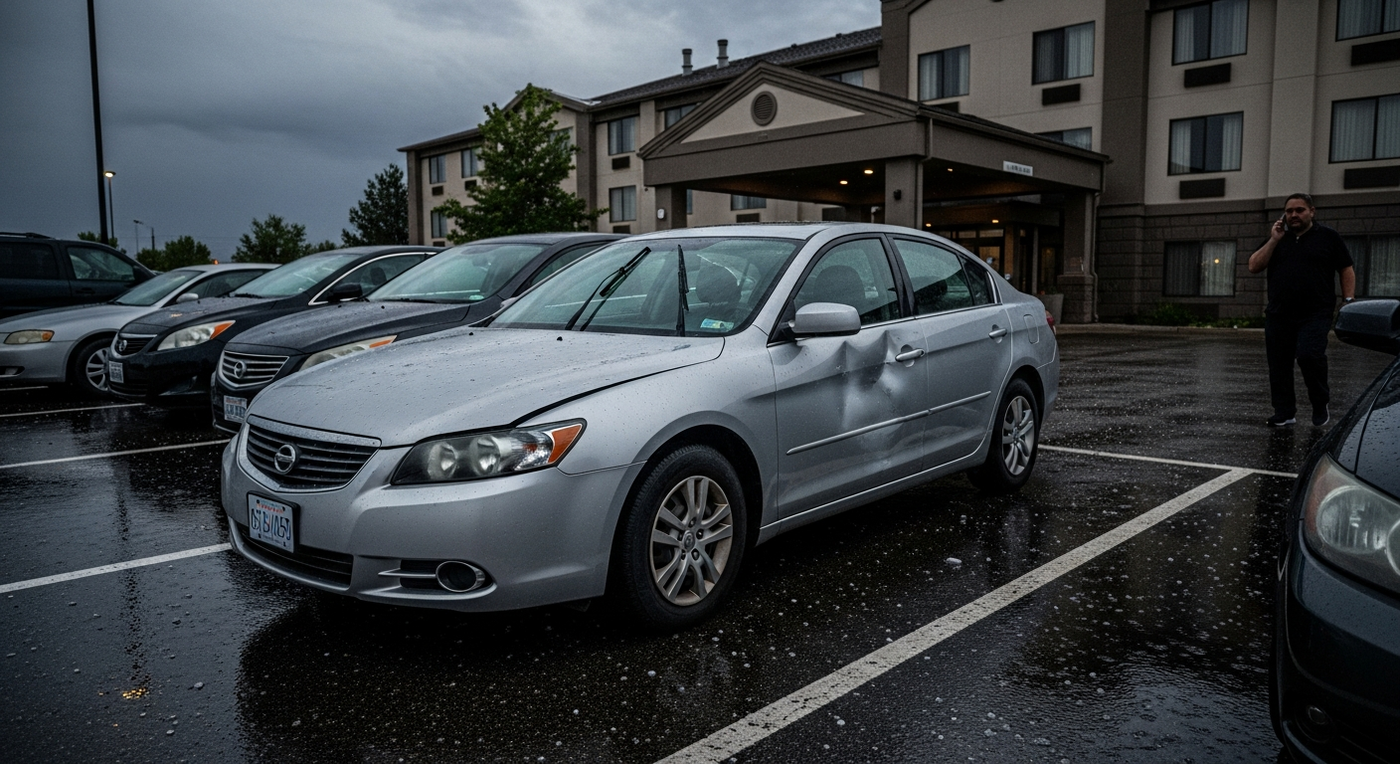
The shop can fix your car in two weeks, but you're number 147 in line behind a supercell that hit three counties.

Your Two-Week Hail Repair Estimate Just Became a Three-Month Wait — Here's the Math
Hail Protector Editorial / GeminiEditorial

The Estimate Measures Work Time, Not Calendar Time

When the body shop tells you "two weeks," they're describing how long your vehicle will occupy a bay once work begins. They're not telling you when work begins. This distinction matters more after hail events than any other type of claim.

A typical hail-damaged sedan requires roughly 80-120 hours of paintless dent removal, panel replacement, and glass work. Spread across a shop's workflow, that translates to 10-14 business days of actual repair time. The estimate is accurate. The timeline is fantasy.

The shop that quoted you already has 50 to 200 vehicles waiting. After a significant hail event — the kind that drops baseball-sized ice across multiple zip codes — metro-area body shops accumulate backlogs that would take six months to clear if they stopped accepting new work tomorrow. They don't stop accepting new work.

Your two weeks of repair time now sits at the end of a queue. The math is simple: if the shop ahead of you has 100 cars and processes four per week, you're waiting 25 weeks before your two weeks begin.
Parts Delays Turn Sequential Work Into Parallel Waiting

Here's what most people get wrong about repair timelines: they assume the shop can start bodywork immediately and order parts while they work.

A hail-damaged vehicle typically needs a windshield, rear glass, and possibly side windows replaced. According to Insurance Information Institute claims data, roughly 60-70% of hail claims include glass damage. The shop cannot complete paintless dent removal, prime and paint panels, and reassemble trim until all glass components are on-site and ready for installation.

Why? Because the final buffing, sealing, and detailing happens in one continuous sequence. Starting bodywork before glass arrives means either leaving the vehicle partially assembled (occupying bay space the shop cannot afford to waste) or reassembling it twice. Shops won't do either.

Windshield manufacturers were already running 3-4 week lead times before the hail season started. After a major storm, that extends to 6-10 weeks for specific makes and models. Your repair doesn't begin until the last backordered part arrives. The two-week estimate assumes all components are in stock.

The Rental Car Math Doesn't Add Up

Most comprehensive policies include rental reimbursement capped at $30-40 per day for 30 days maximum — roughly $900-1,200 total. Industry estimates suggest this covers the typical collision repair timeline, which runs 2-3 weeks from drop-off to pickup.

Hail repairs aren't typical collision repairs.

If you're waiting 8 weeks for queue position, 4 weeks for parts, and 2 weeks for actual repair work, you need a rental for 14 weeks. Your policy covers 4 weeks. The gap costs you $2,800-3,920 out of pocket at standard rental rates.

Some drivers return the rental after 30 days and drive the damaged vehicle. This works if the hail damage is cosmetic — dents and dings that don't affect driveability. It doesn't work if you're missing a windshield or have compromised structural panels. You're stuck paying rental overage or buying a temporary replacement vehicle.

The rental cap made sense when it was written. It doesn't make sense in a post-storm backlog environment where calendar time and work time have completely separated.

80-120

hours

Typical hail repair work

60-70

%

Hail claims include glass

6-10

weeks

Glass backorder after storms

$2,800-3,920

Out-of-pocket rental gap

Shops Cannot Hire Their Way Out of the Backlog

The obvious question: why don't body shops hire more technicians and clear the queue faster?

Certified PDR (paintless dent removal) technicians require 6-12 months of training before they can work independently on hail damage. You cannot staff up for a surge that hits in May and dissipates by August. The economics don't work.

A shop that doubles its workforce in June faces a choice in October: lay off the technicians they just trained, or keep them employed while revenue drops back to baseline. Most shops choose to maintain steady staffing and let the backlog clear gradually. They'll run overtime and weekend shifts, but they won't fundamentally restructure their labor model for a seasonal spike.

This creates a predictable pattern. Hail events in April and May generate backlogs that peak in July and August, then gradually decline through November. If you're getting an estimate in August, you're entering the queue at maximum depth. Your November repair date reflects the reality that 40-60 vehicles are still ahead of you, even after three months of processing.

What Actually Shortens the Timeline

Extended rental coverage is the simplest intervention. Some insurers offer it as an endorsement; most don't advertise it because the take-rate is low. If you're in a hail-prone region, the additional premium — typically around $40-80 annually — pays for itself the first time you need a rental for 90 days instead of 30.

Choosing a shop outside the affected area cuts queue time dramatically. A hailstorm might hammer a 15-mile corridor but leave shops 30 miles north or south completely unaffected. Their backlog is normal — 2-3 weeks instead of 2-3 months. The tradeoff is logistics: you're driving farther for estimates, drop-off, and pickup. For some drivers, that's worth avoiding 60 days of wait time.

Filing the claim but delaying the repair works if you can tolerate cosmetic damage. The claim stays open; you're not forfeiting coverage by waiting. When you schedule the repair in November or December, the queue is shorter and parts availability has normalized. This only makes sense for dent damage without functional impairment. Cracked glass and structural issues need immediate attention.

The Timeline No One Mentions

Insurance adjusters know the backlog exists. They see the same pattern every hail season: initial estimates that assume immediate shop availability, followed by policyholder frustration when the timeline stretches.

Some adjusters will tell you upfront: "The shop quoted two weeks of work, but realistically you're looking at 10-12 weeks total." Others stick to the repair estimate timeframe and let you discover the queue situation when you call to schedule. Neither approach changes the underlying math, but the first one at least sets accurate expectations.

The repair will take as long as it takes. The shop isn't slow; they're drowning. The parts aren't delayed because the supplier is incompetent; they're delayed because 4,000 vehicles in a three-county area need the same windshield. Your rental coverage isn't inadequate because the insurer is cheap; it's inadequate because it was designed for a different type of claim.

Understanding the distinction between work time and calendar time doesn't shorten your wait. It just helps you plan for the gap between what you were told and what actually happens.

Verified Sources

  1. Insurance Information Institute

    Insurance Information Institute

    Insurance claim patterns and rental coverage data

Back to Storm Prep