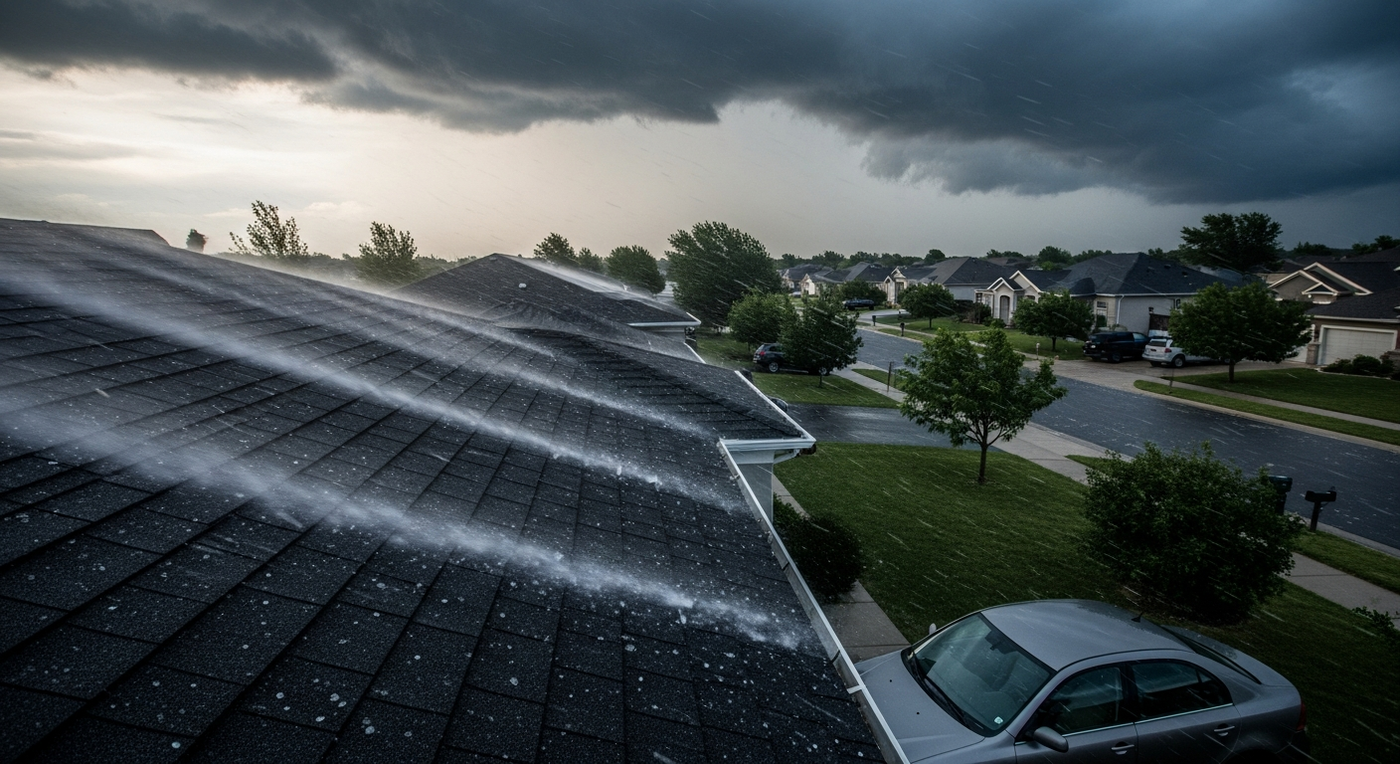
The Vertical Conveyor Belt That Builds Ice
A hailstone begins as a frozen raindrop or ice crystal suspended in a supercell's updraft—a column of rising air that can exceed 100 mph. What happens next resembles a factory assembly line running in reverse gravity. The embryo gets lofted into the storm's coldest layers, collects a coating of supercooled water droplets that freeze on contact, then falls back through warmer zones before the updraft catches it again and sends it up for another pass.
Each cycle adds a new ice shell. Cut a large hailstone in half and you'll see concentric rings like a tree trunk, each layer documenting one trip through the storm's interior. According to NOAA's National Severe Storms Laboratory, stones can complete this loop multiple times in roughly 10–20 minutes, growing from marble-size to golf ball diameter in a window shorter than most people's commute home.
The updraft strength determines the ceiling. Stronger updrafts suspend heavier stones longer, allowing more growth cycles. A storm with 60 mph updrafts might produce inch-diameter hail. Push that to 100 mph and you're looking at baseballs.