Explainer Deep Dive

The Glass Ceiling Problem: Why Your EV's Hail Vulnerability Isn't What You Think

Electric vehicles combine larger glass surfaces, aluminum construction, and fragmented repair networks into a hail damage scenario fundamentally different from conventional cars.

The Glass Ceiling Problem: Why Your EV's Hail Vulnerability Isn't What You Think
Hail Protector Editorial / GeminiExplainer

The Geometry of Exposure

Panoramic glass roofs have become standard equipment on EVs in a way they never did with internal combustion vehicles. The Tesla Model 3, Model Y, Polestar 2, Hyundai Ioniq 5, and Kia EV6 all come with expansive glass as the default configuration. Some don't even offer a traditional metal roof option.

The math is straightforward: a conventional car roof presents roughly 20-25 square feet of surface area to the sky, nearly all of it steel or aluminum. A panoramic roof adds an estimated 12-18 square feet of glass to that equation, depending on the model. You've effectively increased your glass exposure by approximately 40-60% compared to a traditional sedan or crossover.

Glass responds to hail differently than metal. Steel roofs dent. Aluminum roofs dent differently than steel, but they still dent. Glass shatters. There's no middle ground, no minor cosmetic damage you can live with. Once the glass breaks, the repair is binary: full replacement or nothing.

A panoramic glass roof replacement on a Tesla typically runs between $1,500 and $2,500 depending on the model, and that's before you factor in recalibration of any sensors or cameras mounted in the glass. A Rivian R1T's electrochromic roof—the one that tints on demand—costs substantially more. These aren't repairs; they're component swaps that require factory parts.

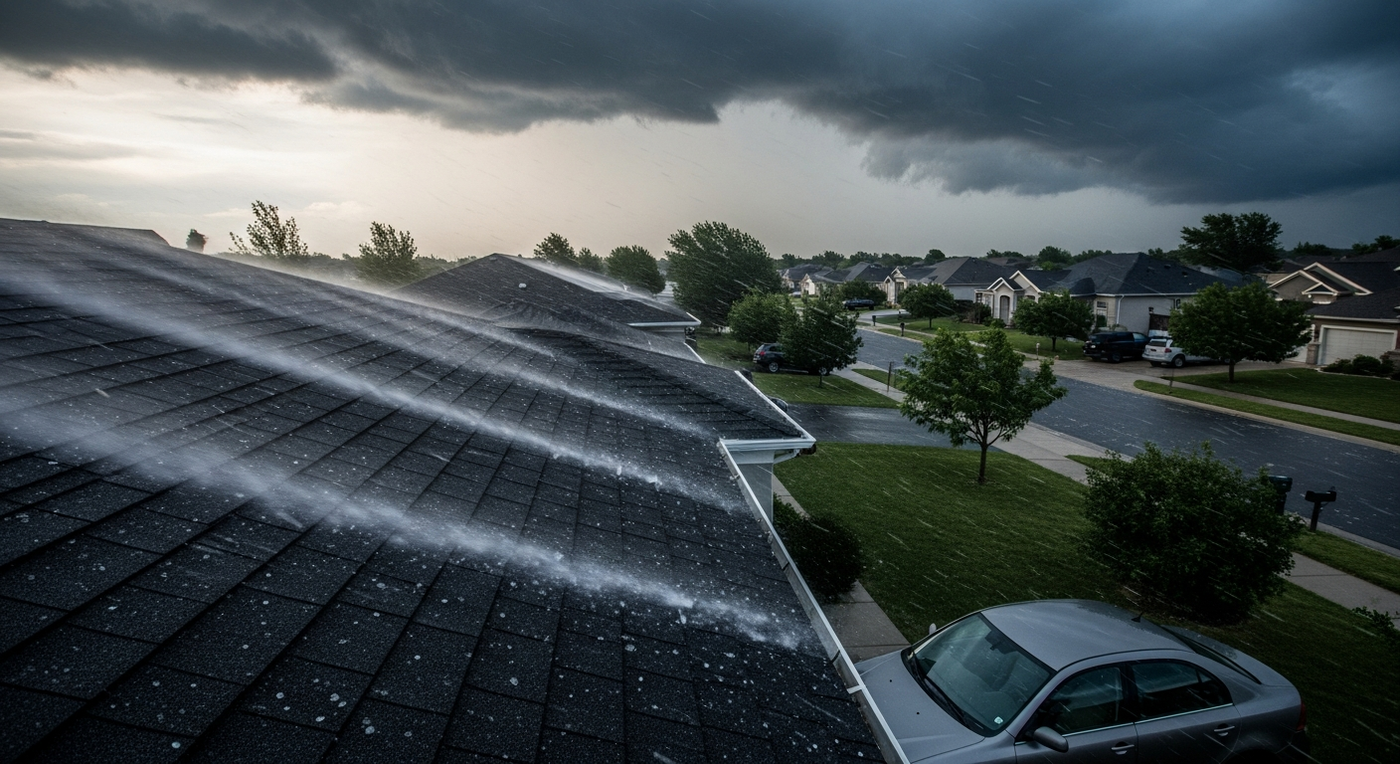
Here's what most people get wrong: they assume hail has to be softball-sized to break automotive glass. In reality, according to Storm Prediction Center severe weather data, one-inch hail (quarter-sized) can crack windshields under the right impact angle, and anything above 1.75 inches poses a serious threat to panoramic roofs. The Great Plains sees hail of that size multiple times per spring season.
15

sq ft

Glass in Model Y roof

40-60

%

Increased glass exposure vs sedans

$1,500-$2,500

Tesla panoramic roof replacement

30-50%

%

Longer EV repair times

Aluminum's Hidden Complexity

Tesla's decision to use aluminum body panels on the Model S and Model X, and Rivian's all-aluminum construction, introduced a repair variable that most hail damage technicians hadn't encountered at scale until recently. Aluminum dents differently than steel. It work-hardens when deformed, meaning the metal becomes brittle where it's been impacted. Pull a dent out of aluminum carelessly and you risk cracking the panel.

Paintless dent repair—the technique that revolutionized hail damage fixes over the past two decades—works beautifully on steel. The metal has memory; skilled technicians can massage dents out from behind the panel without disturbing the paint. Aluminum requires different tools, different pressure, and a lighter touch. Not every PDR technician has trained on it, and those who have typically charge a premium.

Aluminum PDR work typically costs roughly 20-30% more than equivalent steel repairs, assuming you can find someone willing to do it. In smaller markets, you may not have that option. The alternative is conventional body work: sand the panel, apply filler, repaint. Now you're looking at several thousand dollars for damage that would have been roughly a $1,200 PDR job on a steel-bodied Accord.

The Rivian R1T presents an extreme case. The entire body is aluminum, including the bed. A severe hailstorm that peppers the horizontal surfaces—hood, roof, bed—can generate repair estimates in the five-figure range. And because Rivian's production volumes are a fraction of Tesla's, the parts supply chain is thinner. Order a replacement bed panel and you might wait months.

The Repair Network Bottleneck

This is where the damage equation diverges most sharply from conventional vehicles. When hail destroys the windshield on a 2018 Camry, any of three dozen glass shops in a mid-sized city can replace it by Thursday. When hail shatters the panoramic roof on a 2023 Model Y, you're entering a different system entirely.

Tesla's certified body shop network is sparse outside major metro areas. As of early 2024, some states have only a handful of certified locations. Rivian's network is even smaller—the company launched a mobile service program partly because fixed locations couldn't cover their customer geography. This matters because insurance companies increasingly require certified repairs for EVs, particularly when high-voltage battery systems are involved.

The parts backlog compounds the problem. A routine hail event in the Denver metro area might damage hundreds of Teslas in a single afternoon. Each one needs a roof assembly, and Tesla's parts distribution wasn't designed for surge demand of that magnitude. According to Insurance Information Institute data on claim cycle times, EV repairs take roughly 30-50% longer than comparable ICE vehicle repairs, and hail damage amplifies that gap.

Two months without your vehicle isn't unusual. Some owners report waiting three months or longer for parts after major hail events. Rental car coverage through your insurance policy typically caps at 30 days, sometimes 45 if you paid for extended coverage. The gap between when your rental coverage expires and when your vehicle returns becomes your problem to solve.

There's a secondary effect worth noting: total loss thresholds. Insurance companies declare a vehicle totaled when repair costs exceed a certain percentage of its actual cash value—typically around 70-80%. A $60,000 EV with extensive hail damage approaching $45,000 in repair costs gets totaled even though it's mechanically sound. That math plays out differently than it did with your old Civic, where the replacement cost of body panels was a known quantity and repair networks were deep enough to keep labor costs competitive.

Decision Tradeoffs

Pros

  • Open cabin experiencePanoramic glass creates airier, less claustrophobic interior feel
  • Standard EV featureIncluded on most models without additional cost
  • Natural light benefitsImproved visibility and aesthetic appeal during daily driving

Tradeoffs

  • Binary damage outcomeGlass shatters completely rather than denting like metal
  • Limited repair networksFewer certified shops, especially outside major metros
  • Extended downtimeParts backlogs can stretch repairs to 60-90 days
  • Higher total loss riskExpensive repairs push vehicles over insurance thresholds faster

Panoramic roofs enhance daily driving experience but introduce significant financial and logistical exposure in hail-prone regions—a trade-off that depends on local weather patterns and garage access.

The Risk Calculus

If you're parking an EV in hail-prone regions—a swath running from Texas through Oklahoma, Kansas, Nebraska, and into South Dakota—the exposure profile has changed in ways your insurance premium may not yet reflect. Some carriers have started adjusting rates for panoramic glass roofs, but adoption is inconsistent.

Comprehensive coverage deductibles matter more now. That $500 deductible you've carried for years made sense when most hail damage fell below $2,000. When you're facing a roof replacement and aluminum PDR work that could total $5,000 or more, a $1,000 deductible starts looking cheaper on an annual basis. The premium difference might be roughly $150 per year, but one hail event pays for a decade of higher premiums.

Garage access becomes a different calculation. If you're renting an apartment with uncovered parking in Oklahoma City, the actuarial risk of hail damage to an EV with a panoramic roof is measurably higher than it was for your previous vehicle. Some owners have started seeking rentals with garage access specifically for this reason, treating covered parking as a vehicle protection cost rather than a convenience.

The counterintuitive piece: some of the most hail-resistant EVs are the least sexy. The Nissan Leaf has a traditional steel roof. The Chevy Bolt uses steel body panels. The Ford F-150 Lightning offers a panoramic roof as an option, not standard equipment—you can decline it. These vehicles give up the airy cabin feel that's become part of the EV aesthetic, but they also give up several thousand dollars of hail exposure.

None of this makes EVs a bad choice in hail country. It just makes them a different choice, one that carries risk variables that weren't part of the equation five years ago. The glass roof that makes your morning commute feel less claustrophobic also makes your vehicle more expensive to insure and harder to repair when weather turns severe. Whether that trade-off makes sense depends entirely on how much you value that view of the sky—and how often the sky decides to throw ice at you.

Verified Sources

  1. NOAA National Centers for Environmental Information

    NOAA National Centers for Environmental Information

    historical hail frequency data by region

  2. spc.noaa.gov

    spc.noaa.gov

    Referenced in article via spc.noaa.gov.

Back to Hail Science