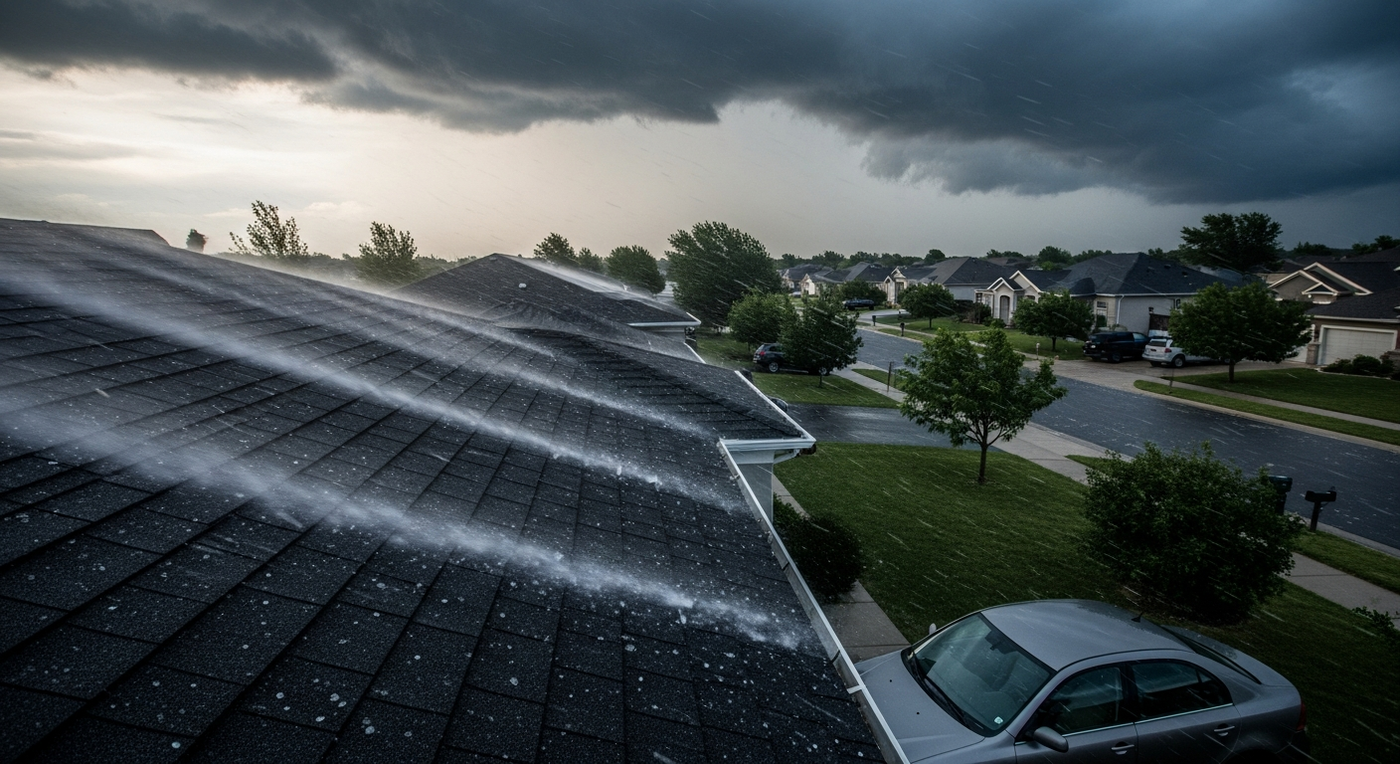
The April Window
Austin's hail season doesn't align neatly with either its northern or southern neighbors, and that timing mismatch catches people off guard. San Antonio, roughly 80 miles south, sees its peak hail activity in late March and early April. The Dallas-Fort Worth metroplex, 200 miles north, experiences maximum hail frequency in late April and May. Austin sits in between, with peak risk concentrated in the first three weeks of April — a window when transplants from San Antonio think the worst has passed and transplants from DFW think it hasn't started yet.
The meteorological reason involves the northward progression of the jet stream and the seasonal advance of Gulf moisture. In early spring, the boundary between cool, dry air from the Rockies and warm, humid air from the Gulf typically sets up across Central Texas. As April progresses, that boundary shifts north, taking the most favorable hail-producing conditions with it. But Austin's position along the escarpment means the terrain can trigger storms even when the large-scale atmospheric setup isn't ideal. A day that looks marginal on a synoptic weather map can still produce damaging hail if the wind direction pushes unstable air over the hills at the right angle.
Here's what most people get wrong: they assume hail risk correlates with heat. The logic seems sound — hotter days mean stronger updrafts, stronger updrafts mean bigger hail. But Austin's most prolific hail storms typically occur when surface temperatures are in the 70s or low 80s, not the 90s. The key ingredient isn't surface heat; it's the temperature difference between the surface and the upper atmosphere. A 75-degree afternoon with cold air aloft creates far more instability than a 95-degree day with warm air throughout the atmospheric column. April provides that contrast. By June, when Austin regularly hits the mid-90s, the upper atmosphere has warmed too, and hail storms become less frequent despite the oppressive surface heat.
The city's explosive growth has placed tens of thousands of new residents directly in the path of these April supercells without anyone explicitly explaining the risk. Between 2010 and 2023, the Austin metro added an estimated 400,000 people, with much of that growth concentrated in suburbs west and southwest of downtown — precisely the areas where storms initiate. Developments like the massive Headwaters community in Dripping Springs or the expansion of Bee Cave didn't exist during the last major hail outbreak in the 1990s. The houses are new. The hail pattern isn't.