What the Palmer Divide Actually Does
Most explanations of Colorado Front Range weather treat the Palmer Divide—the high plateau between Denver and Colorado Springs—as a simple barrier, but its role is more subtle. The divide sits at approximately 7,000 feet elevation, creating a kind of atmospheric speed bump that disrupts storm motion. Supercells moving northeast from the Springs often weaken temporarily as they cross this higher terrain, then reorganize on the downslope side near Castle Rock or Parker. This reorganization process can change hail production dramatically.
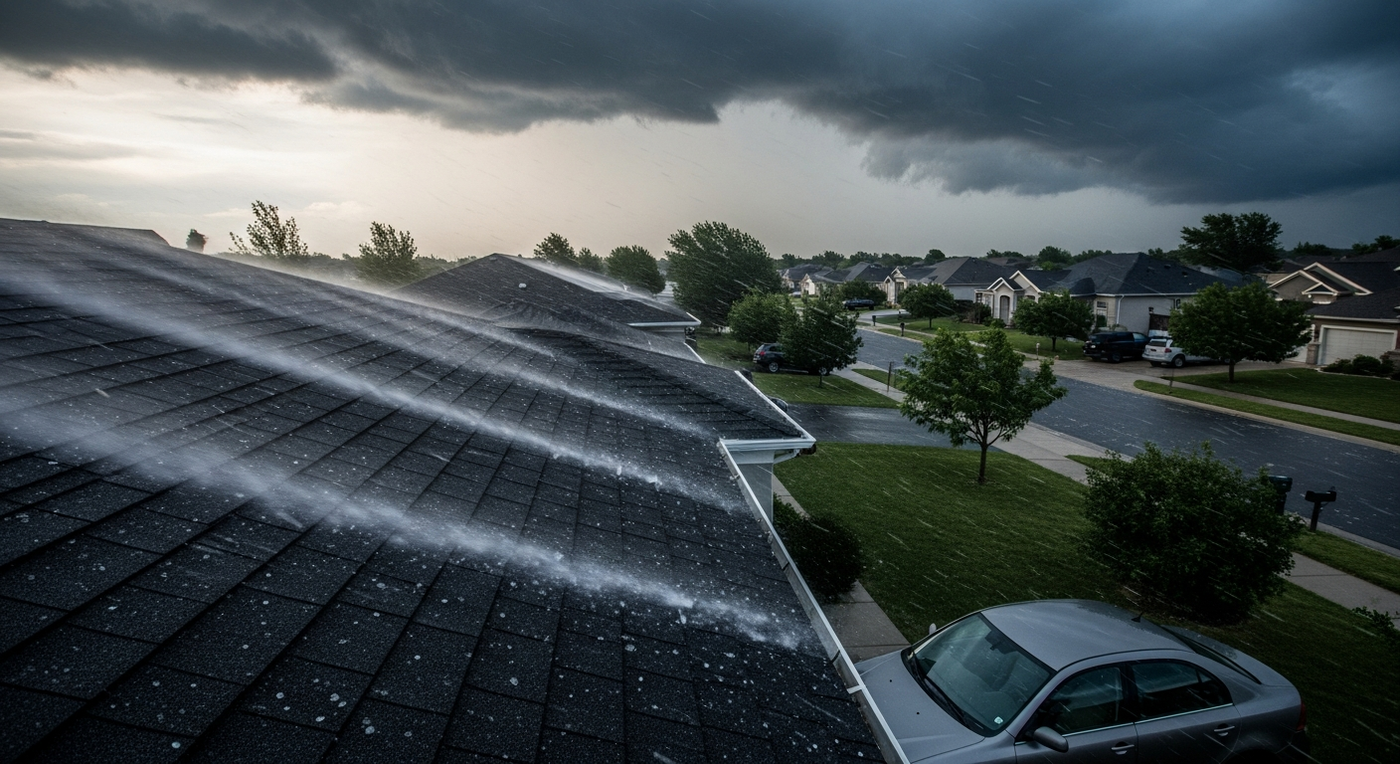
According to National Severe Storms Laboratory research, supercells produce their largest hail when the updraft maintains a consistent tilt and strength. The Palmer Divide disrupts that consistency. Storms that looked terrifying on radar over Colorado Springs sometimes arrive in south Denver as heavy rain producers with only pea-sized hail. Other times—and this is where forecasting gets difficult—the reorganization process actually intensifies the storm, creating a second hail core that hits the southern Denver suburbs harder than anything Colorado Springs experienced.
The unpredictability cuts both ways. Denver occasionally sees catastrophic hail events that Colorado Springs entirely misses, usually when storms initiate over the foothills west of Boulder or Golden and track southeast. The July 2009 hailstorm that caused an estimated $1.4 billion in damage across the Denver metro barely touched Colorado Springs. But statistically, Colorado Springs faces a higher frequency of significant hail days—roughly 7-9 days per year with hail larger than one inch in diameter, compared to Denver's typical 4-6 days, according to Storm Prediction Center climatology data.
What's genuinely strange is how localized the damage patterns become within each city. In Colorado Springs, the northeast quadrant—roughly the area bounded by Academy Boulevard, Powers Boulevard, and Woodmen Road—takes a disproportionate beating because it sits directly in the path of storms moving off Pikes Peak. Insurance actuaries have noticed. Comprehensive coverage premiums in ZIP codes 80920, 80921, and 80922 run noticeably higher than in southwest Colorado Springs neighborhoods, even though they're only a few miles apart. Denver shows similar microclimates, but the premium variations tend to follow county lines rather than specific storm corridors.
The vehicle insurance implications are straightforward: if you're parking a car outside in north Colorado Springs, you're gambling against worse odds than someone doing the same thing in most Denver neighborhoods. Comprehensive claims in high-risk Colorado Springs ZIP codes typically run approximately 30-40% higher than the Denver metro average over a five-year period. That's not a small difference—it's the gap between "I should probably get a garage" and "I absolutely need covered parking or I'm going to file a claim every other summer.".
The real frustration for residents of both cities is that the storms are genuinely difficult to predict more than a few hours in advance. Pikes Peak's influence on storm development is consistent, but whether any given day will produce severe hail depends on upper-level wind patterns, moisture availability, and atmospheric instability that can change hour by hour. A morning forecast showing moderate hail risk can turn into a catastrophic afternoon, or fizzle into nothing but virga and distant thunder.
That uncertainty is why hail damage timing matters so much in both metros. Once the storms hit, you're looking at repair costs that can run several thousand dollars for a heavily damaged vehicle—new hood, roof, windshield, and paintless dent removal across every panel. The difference between filing that claim in May versus waiting until September can affect your premium renewals for the next three to five years, but you can't exactly schedule when a supercell will park over your neighborhood and drop golf balls from the sky.