Explainer Deep Dive

The Narrow Path: Why Hail Damage Skips One Parking Lot and Destroys the Next

Hail swaths rarely exceed two miles wide, and understanding their geometry explains why your neighbor's car emerged unscathed while yours needed $4,000 in bodywork.

The Narrow Path: Why Hail Damage Skips One Parking Lot and Destroys the Next
Hail Protector Editorial / GeminiExplainer

The Swath Is a Corridor, Not a Carpet

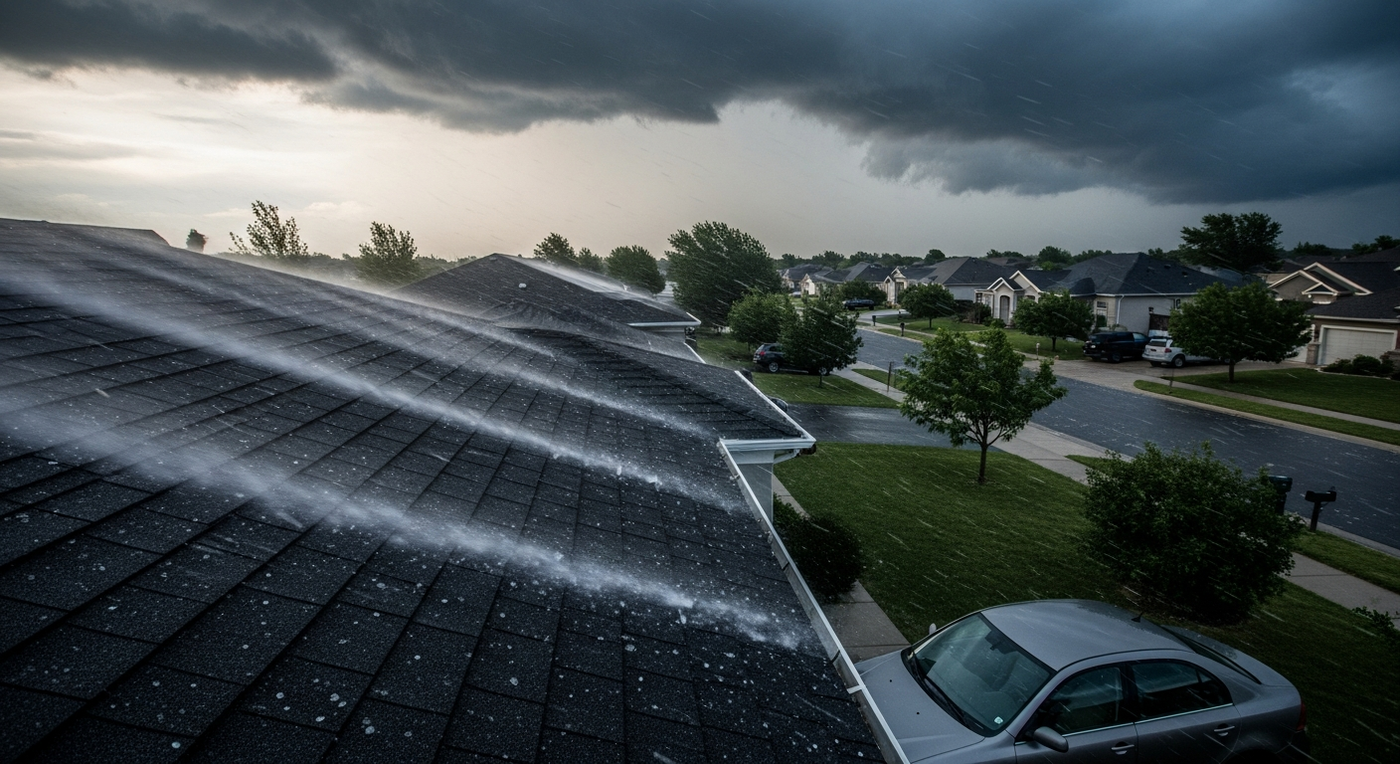
When a supercell thunderstorm moves across a city, it doesn't distribute hail evenly like rain. The damage corridor—what meteorologists call the hail swath—typically measures between a few hundred yards and roughly two miles wide, extending anywhere from approximately five to thirty miles long. This creates the maddening situation where cars parked three blocks apart experience completely different storms. One dealership lot suffers total loss across its inventory while a competitor across the highway reports nothing larger than pea-sized stones.

The swath follows the storm's track with remarkable consistency. If a supercell is moving northeast at approximately 35 mph, the hail corridor extends northeast in a relatively straight line, occasionally widening or narrowing but rarely deviating significantly from that path. This directional consistency means that understanding storm motion gives you predictive power—if radar shows a supercell approaching from the southwest, you can reasonably infer which parts of town face the highest risk.

Mesocyclone Architecture Creates the Pattern

The mesocyclone—the rotating updraft at a supercell's core—functions as both hail factory and sorting mechanism. Air spirals upward through this column at speeds that can exceed 100 mph, carrying water droplets into subfreezing altitudes where they freeze and accumulate layers of ice. But the mesocyclone doesn't drop its hail randomly. Its internal structure determines where stones fall.

Most damaging hailstorms occur when the mesocyclone tilts with height. The updraft base might sit at 5,000 feet while the top extends to 40,000 feet, but the column doesn't rise vertically—it leans downwind. This tilt creates what researchers call the "hail cascade zone" on the storm's downwind flank. Hailstones that grow too heavy to remain suspended in the updraft get ejected from the mesocyclone's side, typically on its forward-right quadrant relative to storm motion. They then fall through a relatively narrow corridor.

The tilt angle matters enormously. A strongly tilted mesocyclone spreads hail over a wider area but produces smaller maximum sizes. A more upright mesocyclone concentrates the largest stones into a tighter swath. According to National Severe Storms Laboratory research on supercell structure, the most intense hail cores—where stones exceed two inches—often occupy less than 20% of the total hail swath width.

~2

miles

Maximum typical swath width

100

mph

Peak updraft velocity

~20%

%

Swath area with largest hail

30

minutes

Warning time at 20 miles

Storm-Relative Winds Complicate the Picture

The mesocyclone doesn't exist in isolation. It's embedded in larger-scale winds that vary with altitude, and these environmental winds modify where hail falls. Meteorologists analyze "storm-relative winds"—the wind pattern as experienced by the moving storm itself. Strong storm-relative winds at mid-levels can push the hail cascade zone farther from the mesocyclone core.

In practice, this means the forward-right bias can shift. A supercell moving east through an environment with strong southerly winds aloft might drop its heaviest hail almost due north of the mesocyclone center. The hail still falls in a narrow swath, but that swath's position relative to the storm shifts based on the wind profile.

This is why meteorologists issue warnings for specific areas rather than drawing circles around storm centers. They're accounting for mesocyclone structure and environmental winds to estimate where the cascade zone will actually track. When a warning polygon extends northeast from a storm currently southwest of town, that shape reflects the expected swath geometry.

Multiple Swaths and Secondary Maxima

How The Mechanism Works

Here's the practical implication: if you're watching radar and see a supercell approaching, the highest-risk zone sits forward and right of the storm's current position. A supercell moving due east creates maximum danger to its northeast. This isn't absolute—mesocyclones can wobble, and some storms produce multiple swaths—but the forward-right bias holds across most severe hail events.

What This Means for Your Windshield

Understanding swath geometry doesn't eliminate risk, but it transforms hail from an act of God into a phenomenon with predictable spatial patterns. When severe weather threatens, you're not making a binary choice between "safe" and "unsafe"—you're evaluating positions relative to a likely damage corridor.

If radar shows a supercell twenty miles away, moving northeast at approximately 40 mph, you have roughly thirty minutes. The question isn't "will it hail?" but "where will the swath track?" A car parked northeast of your current location sits in the projected path. A car parked southwest or perpendicular to storm motion has better odds.

The swath's narrowness also means that post-storm damage surveys often reveal sharp gradients. One subdivision files hundreds of insurance claims while a neighborhood a mile away reports nothing. This isn't luck—it's geometry. The mesocyclone's tilt, the storm's motion, and the environmental winds aligned to place one area in the cascade zone and spare the other.

Most people never think about mesocyclone tilt or storm-relative winds. They see hail as random, something that either happens or doesn't. But the physics creates structure, and structure creates patterns.

Verified Sources

  1. NOAA Storm Prediction Center

    NOAA Storm Prediction Center

    Official convective outlook archive and risk categories.

Back to Hail Science